


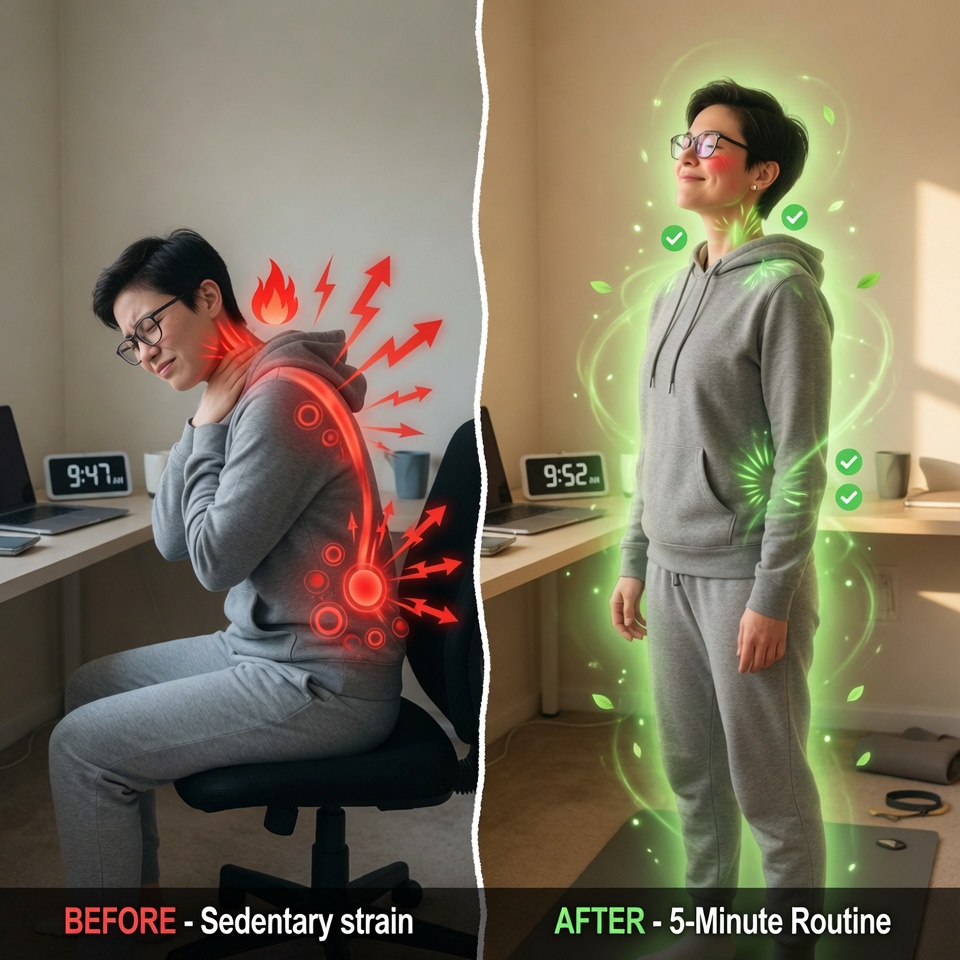
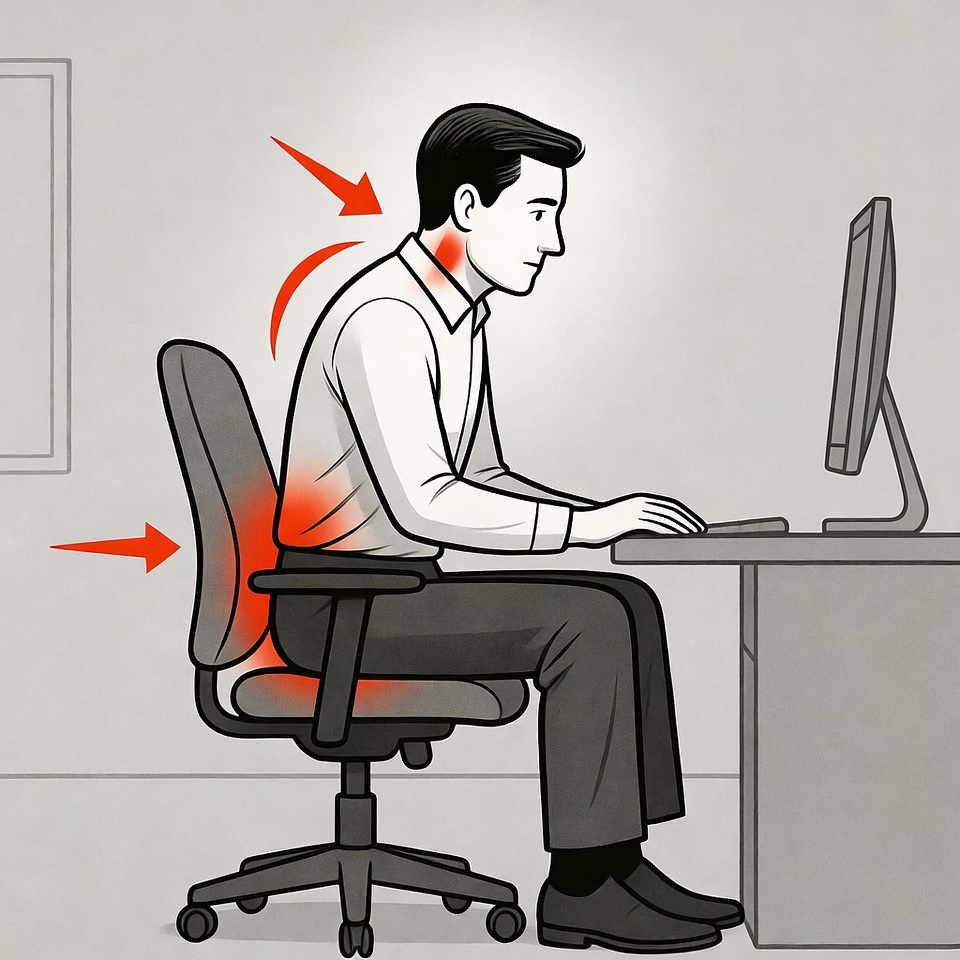
You already know sitting is the new smoking. Your back aches. Your hips feel tight. Your neck has that permanent forward slump. You stand up and feel like a question mark. The problem isn’t just discomfort—it’s the slow erosion of your mobility, posture, and energy.
But here’s the good news: you don’t need a gym membership, workout clothes, or even to leave your desk. In just five minutes, you can reverse hours of sitting damage, wake up dormant muscles, and reset your body for the rest of the day. These aren’t gentle stretches (though those help). These are targeted, efficient movements designed to attack the specific damage caused by sitting. Let’s melt it away.
The Anatomy of Sitting Damage: What You’re Fighting 🧬
Before we move, understand the enemy:
- Tight hip flexors: Shortened from 90-degree angle sitting.
- Lazy glutes: Gluteal amnesia from lack of activation.
- Rounded shoulders: From reaching forward to keyboard/mouse.
- Forward head posture: From looking down at screens.
- Thoracic stiffness: Upper back gets locked in a C-curve.
Each exercise below directly counters one of these issues. Do them in sequence. Five minutes. Let’s go.
The 5-Minute Desk Workout Routine
Do this every 2-3 hours, or at minimum twice during your workday (mid-morning and mid-afternoon). Set a recurring calendar alert called Melt the Damage.
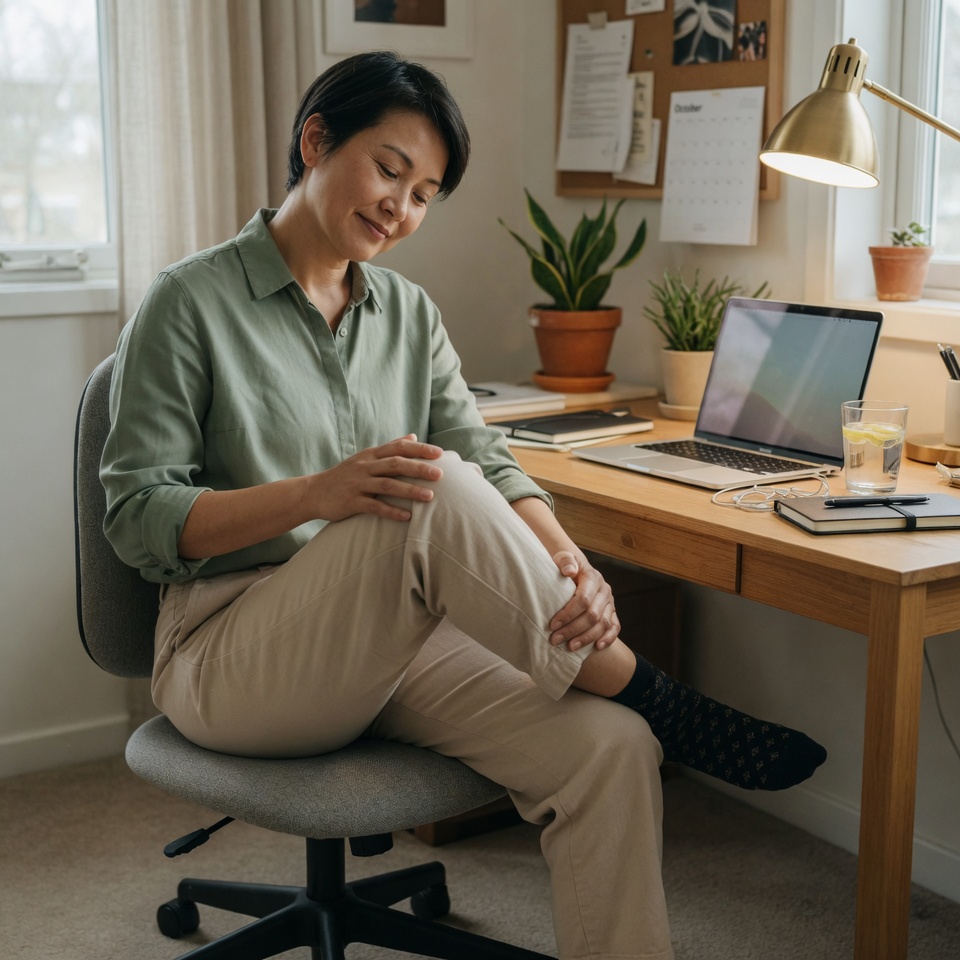
Exercise 1: The Seated Figure-Four Stretch (Hip Opener) 🦵
Target: Tight hips and glutes. This is your #1 sitting antidote.
How to do it:
- Sit tall in your chair, feet flat on the floor.
- Cross your right ankle over your left knee, creating a 4 shape with your legs.
- Keep your spine straight. Gently press down on your right knee with your hand.
- You should feel a deep stretch in your right hip/glute.
- Hold for 30 seconds. Breathe deeply. Switch legs.
Why it’s magic: It directly counteracts the 90-degree hip flexion of sitting, opening the hip capsule and relieving lower back tension.
Pro Tip: If your knee floats high, scoot your hips forward in the chair. If it’s too intense, keep your foot on the floor and just cross your ankle over the opposite shin.
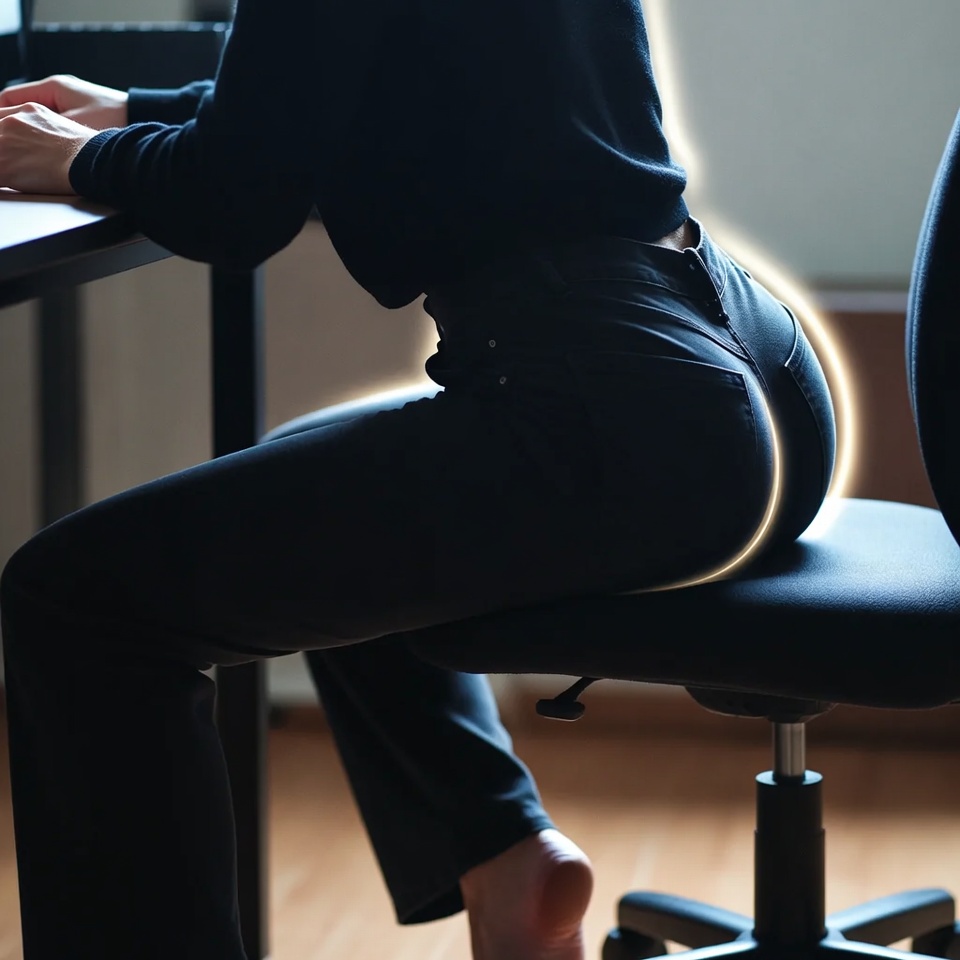
Exercise 2: The Seated Glute Activation (The Glute Awakening) 🍑
Target: Waking up your dormant glute muscles.
How to do it:
- Sit tall with both feet flat on the floor.
- Squeeze your right glute as hard as you can. Hold for 5 seconds. Release.
- Immediately squeeze your left glute for 5 seconds.
- Alternate for 30 seconds total (3 squeezes per side).
- For advanced: Lift one heel slightly off the floor while squeezing that glute.
Why it’s magic: Sitting turns off your glutes. They forget how to fire. This simple isometric activation wakes them up, improving hip stability and lower back support.
Pro Tip: You can do this discreetly during meetings. No one will know you’re working your glutes.
Exercise 3: The Thoracic Extension Over Chair Back (Upper Back Opener) 📐
Target: Reversing the hunched C curve of your upper back.
How to do it:
- Scoot to the front edge of your chair.
- Place your hands behind your head, elbows wide.
- Gently lean back over the top of your chair back, letting your upper back and shoulder blades drape over the edge.
- Keep your core engaged to protect your lower back.
- Hold for 15 seconds. Slowly sit up. Repeat 3 times.
Why it’s magic: Your thoracic spine (mid-back) is designed to extend (bend backward). Sitting locks it in flexion. This stretch restores mobility, opens your chest, and improves breathing.
Safety Note: Use a chair with a stable, padded back. Don’t force it. Go only as far as comfortable.

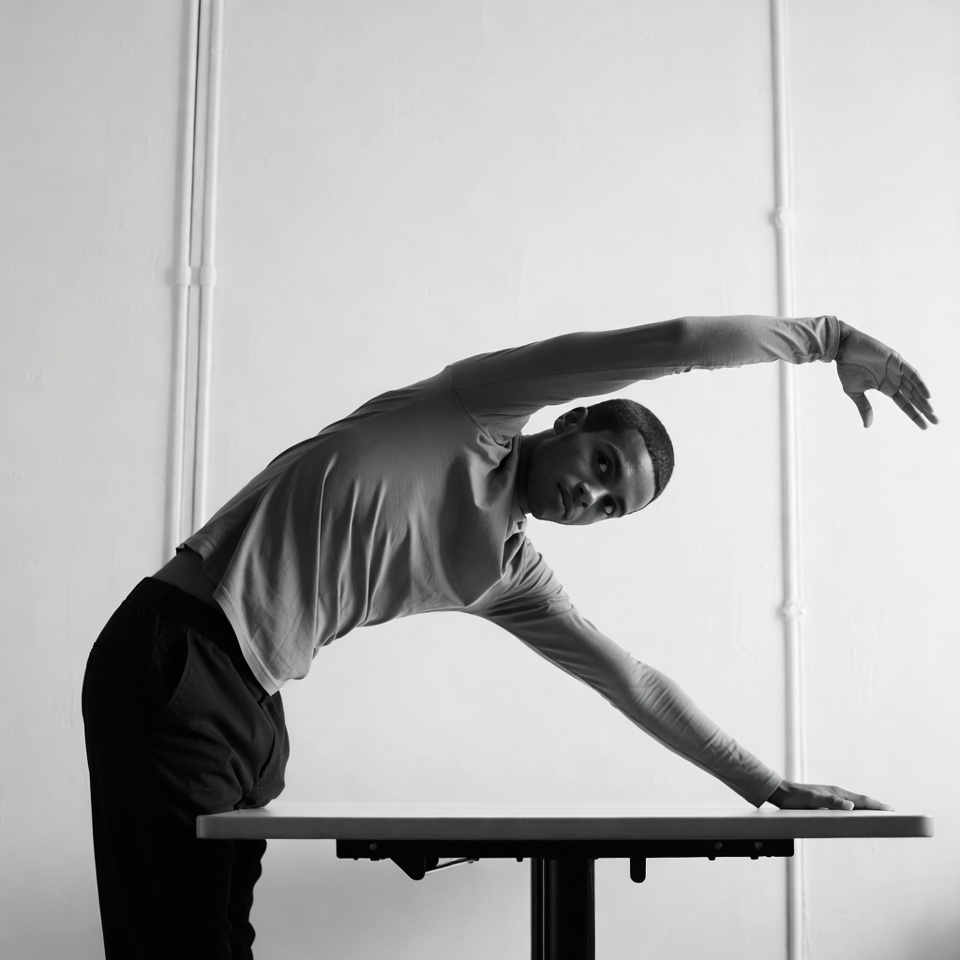
Exercise 4: The Standing Desk Pulldown (Use Your Desk Edge) 🏋️
Target: Lats, shoulders, and spinal decompression.
How to do it:
- Stand up (if you can). If not, you can do seated.
- Reach both arms straight up overhead.
- Grab the edge of your desk (or the top of your chair back).
- Keeping your arms straight, gently pull your chest down toward the desk.
- Feel the stretch through your lats and sides.
- Hold for 20 seconds. Repeat twice.
Why it’s magic: This is a vertical spinal traction. It creates space between your vertebrae, counteracting the compression of sitting. It also stretches the latissimus dorsi, a major muscle that gets tight and pulls your shoulders forward.
Pro Tip: Breathe out as you pull down. Imagine your spine lengthening toward the floor.
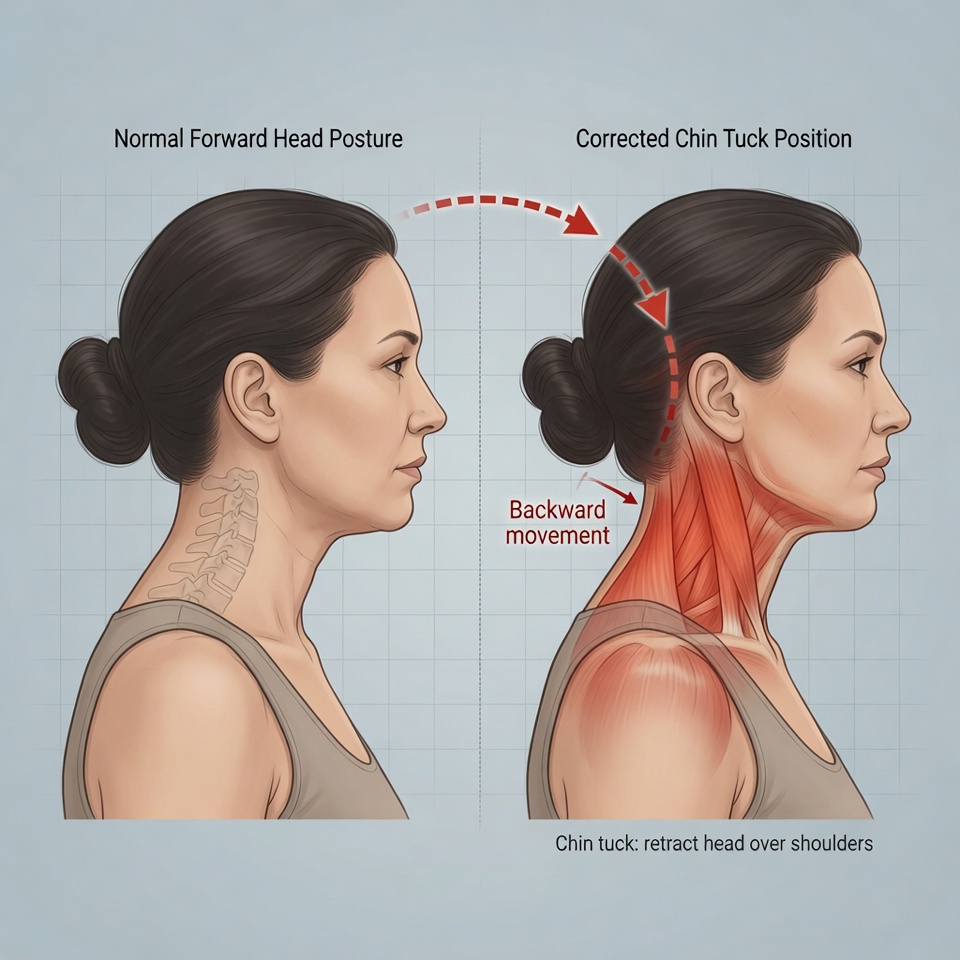
Exercise 5: The Neck Retraction & Chin Tuck (Tech Neck Fix) 📱
Target: Forward head posture and upper neck tension.
How to do it:
- Sit or stand tall. Keep your eyes level, looking straight ahead.
- Gently draw your chin straight back, as if making a double chin.
- Feel the stretch at the base of your skull and the back of your neck.
- Hold for 5 seconds. Release.
- Repeat 10 times.
Why it’s magic: Every inch your head moves forward adds 10 pounds of pressure on your cervical spine. This exercise strengthens the deep neck flexors and retrains your head to sit over your shoulders.
Pro Tip: Do this while waiting for a file to load or a webpage to open. It’s invisible and incredibly effective.
Exercise 6: The Seated Spinal Twist (Desk Detox) 🔄
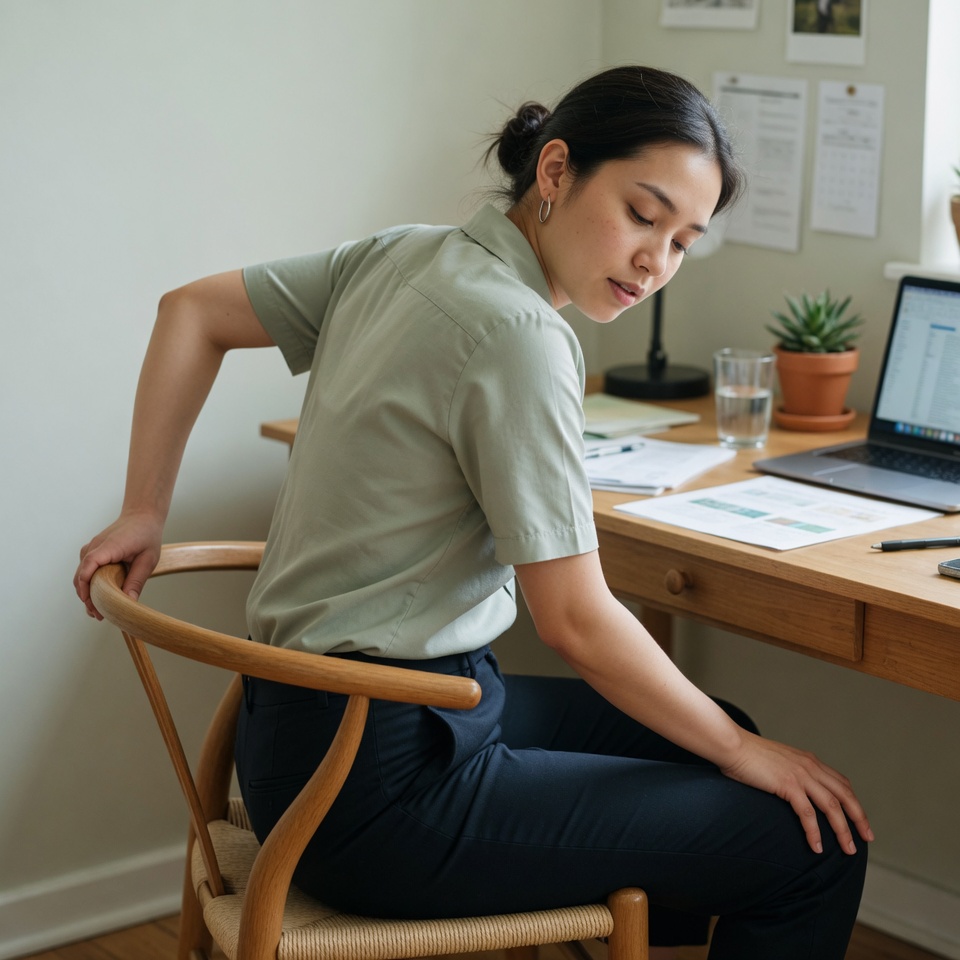
Target: Spinal mobility and oblique stretch.
How to do it:
- Sit sideways in your chair (optional) or simply turn your torso.
- Place your right hand on the back of the chair and your left hand on your right knee.
- On an exhale, gently twist your torso to the right, looking over your right shoulder.
- Hold for 15 seconds. Breathe into the twist.
- Untwist and switch sides.
Why it’s magic: Twisting mobilizes the spinal joints, improves circulation to the discs, and massages your abdominal organs. It’s a complete reset for your core and back.
Pro Tip: Keep your hips facing forward. The twist should come from your ribcage and spine, not your hips.
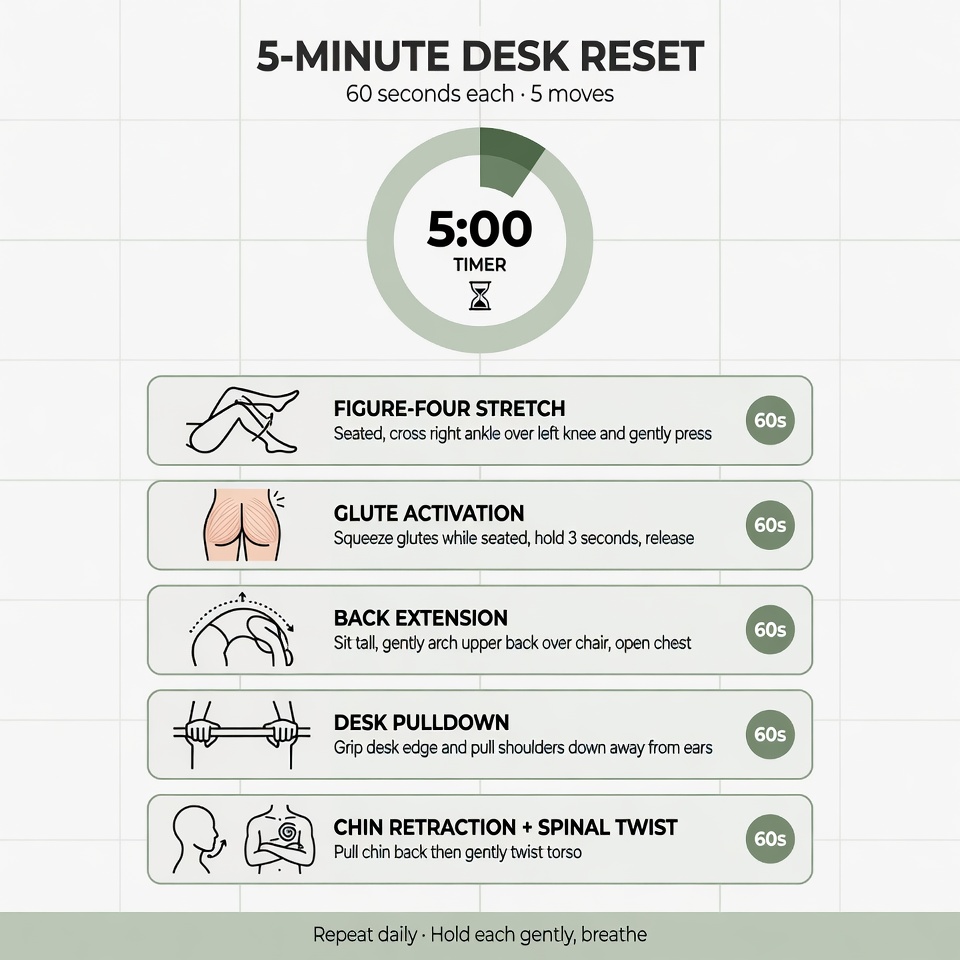
The 5-Minute Timer Flow (Do This Exact Sequence)
Set a timer for 5 minutes. Move smoothly from one exercise to the next:
- 0:00-0:30 – Seated Figure-Four (Right leg)
- 0:30-1:00 – Seated Figure-Four (Left leg)
- 1:00-1:30 – Seated Glute Activation (alternating)
- 1:30-2:15 – Thoracic Extension (3 holds of 15 sec)
- 2:15-2:55 – Desk Pulldown (2 holds of 20 sec)
- 2:55-3:45 – Neck Retractions (10 reps, ~5 sec each)
- 3:45-5:00 – Seated Spinal Twist (30 sec per side)
Bonus: If you have 30 extra seconds, stand up and shake out your arms and legs. Let blood flow return.
The Invisible Workout (For Open Offices)
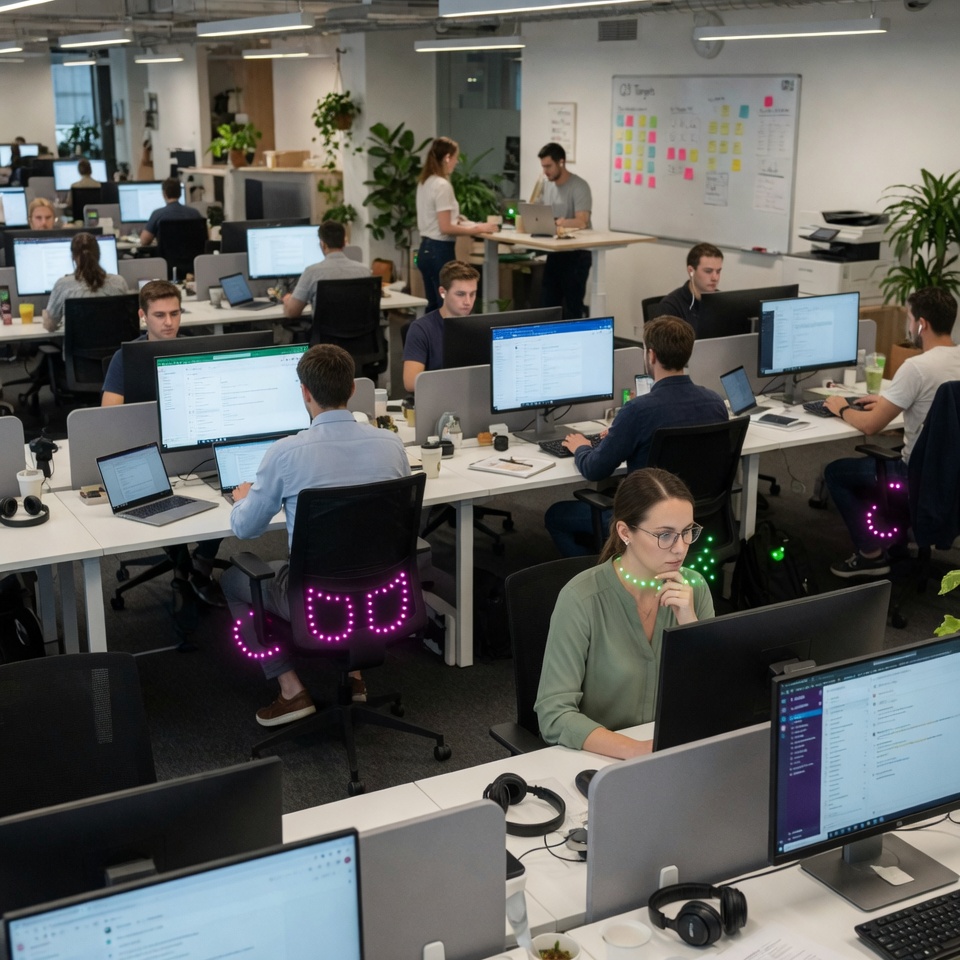
Worried about looking weird? No problem. Here’s the stealth version you can do without anyone noticing:
- Glute squeezes (nobody sees)
- Chin tucks (looks like you’re concentrating)
- Ankle pumps (under the desk)
- Seated leg lifts (straighten one leg, hold 5 seconds, lower)
- Deep diaphragmatic breaths (stress relief + core engagement)
Why 5 Minutes Is Enough (The Science of Micro-Movement)
Research shows that breaking up sitting time with even 1-2 minutes of movement significantly improves metabolic health, reduces back pain, and increases cognitive performance. Five minutes creates a movement snack that resets your postural muscles, lubricates your joints, and restores blood flow to compressed areas. It’s not about getting a workout-it’s about undoing the damage before it compounds.
Your New Workday Habit
Set two alarms on your phone:
- 10:00 AM – “Melt the Damage”
- 2:00 PM – “Melt the Damage Again”
Keep a sticky note on your monitor: 5 minutes saves 5 hours of pain.
Your body isn’t broken-it’s just stuck. These five minutes are your release valve. No gym bag, no sweat, no excuses. Just you, your chair, and the quiet rebellion against the sitting epidemic. Start with the first stretch right now. Your back will send a thank-you note. 🙏












 English
  Deutsch
  Français
  Italiano
  Español
  Čeština
  Polski
  Bahasa Indonesia
  Türkçe
  Svenska
  Українська
  Português do Brasil