




🛌🌙. You’ve tried counting sheep, melatonin gummies, and putting your phone away an hour before bed. Yet, you still spend nights staring at the ceiling or waking up feeling like you barely slept. What if the secret to truly restorative sleep isn’t just in your habits, but in your environment?
Your bedroom isn’t just a place to collapse at night—it’s a sleep sanctuary, a biological reset chamber. By optimizing this environment using neuroscience and sleep science, you can train your body to achieve deeper, more efficient rest. Here are the most impactful, science-backed tweaks to transform your bedroom.
Read also: The 5-Minute Morning Stretch That Eases Back Pain
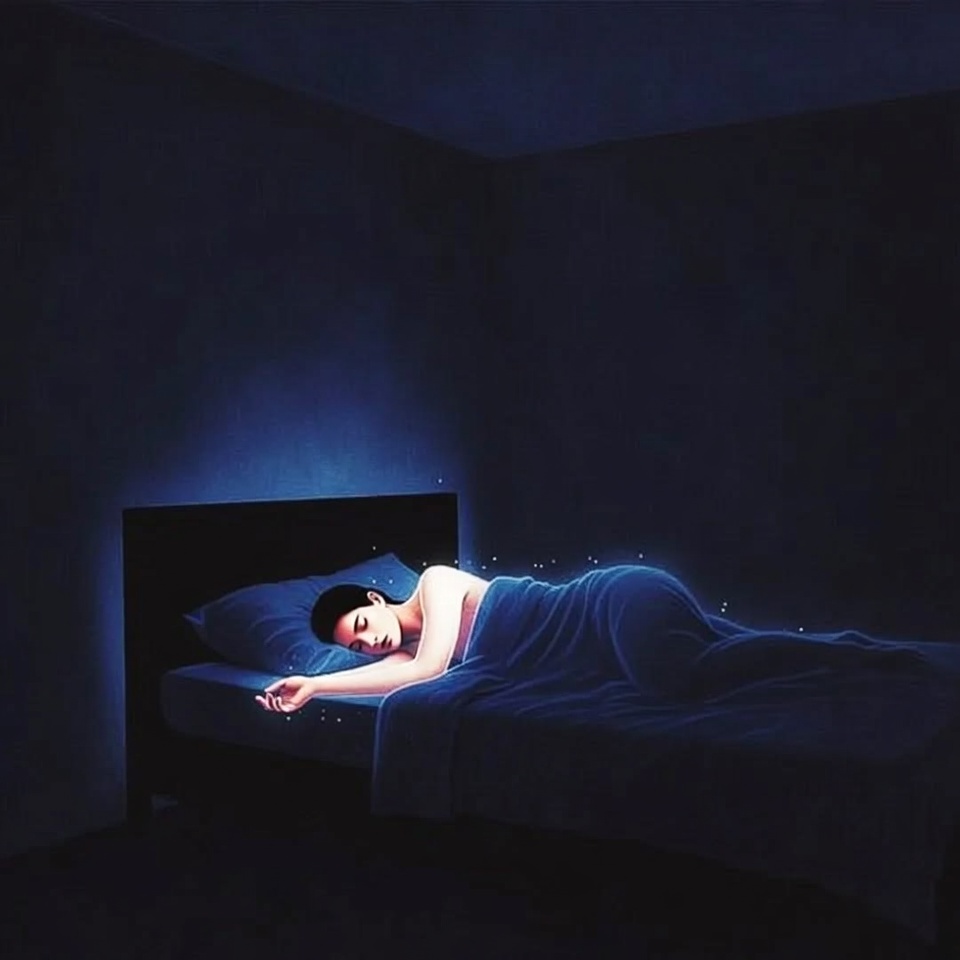
1. The Absolute Darkness Doctrine 🌑
The Hack: Install true blackout curtains or a sleep mask. The goal is zero photons hitting your eyelids.
The Science:
Light exposure at night, even tiny amounts from a charger LED or streetlamp, disrupts your pineal gland’s production of melatonin, the sleep hormone. A 2022 study in Sleep Medicine found that ambient light during sleep was correlated with higher nighttime heart rates and increased insulin resistance by morning. Your brain interprets even dim light as a signal that it’s time to be alert.
How to Implement:
- Blackout Curtains: Look for ones with a rubberized backing or thermal lining that seals to the wall. Install them wider than the window frame.
- The Glow Check: Once lights are out, hold your hand in front of your face. If you can see its silhouette, it’s not dark enough.
- Secondary Defense: Cover or remove all electronic LEDs with black electrical tape. Consider a 100% light-blocking sleep mask like the Manta Sleep Mask.
2. The Thermal Drop Strategy ❄️🔥
The Hack: Cool your bedroom to 65-68°F (18-20°C).
The Science:
Your core body temperature needs to drop by about 1-2 degrees Fahrenheit to initiate and maintain sleep. This process is part of your circadian rhythm. A cooler room facilitates this drop by dissipating heat through your hands, feet, and head. It also improves the quality of slow-wave sleep, the deepest, most restorative phase.
How to Implement:
- Smart Thermostat: Set a schedule to lower the temperature 30-60 minutes before bedtime.
- Bedding Layers: Use breathable, natural fibers (cotton, linen, bamboo) for sheets and layer blankets instead of one heavy duvet. This allows for easy micro-adjustments.
- The Hot-Cold Contrast: Try taking a warm bath or shower 90 minutes before bed. The subsequent rapid cooldown mimics the natural temperature drop, sending a powerful signal to your brain that it’s time for sleep.
3. The Soundscape Engineering 🎧
The Hack: Use continuous, monotonous sound to mask disruptive noises.
The Science:
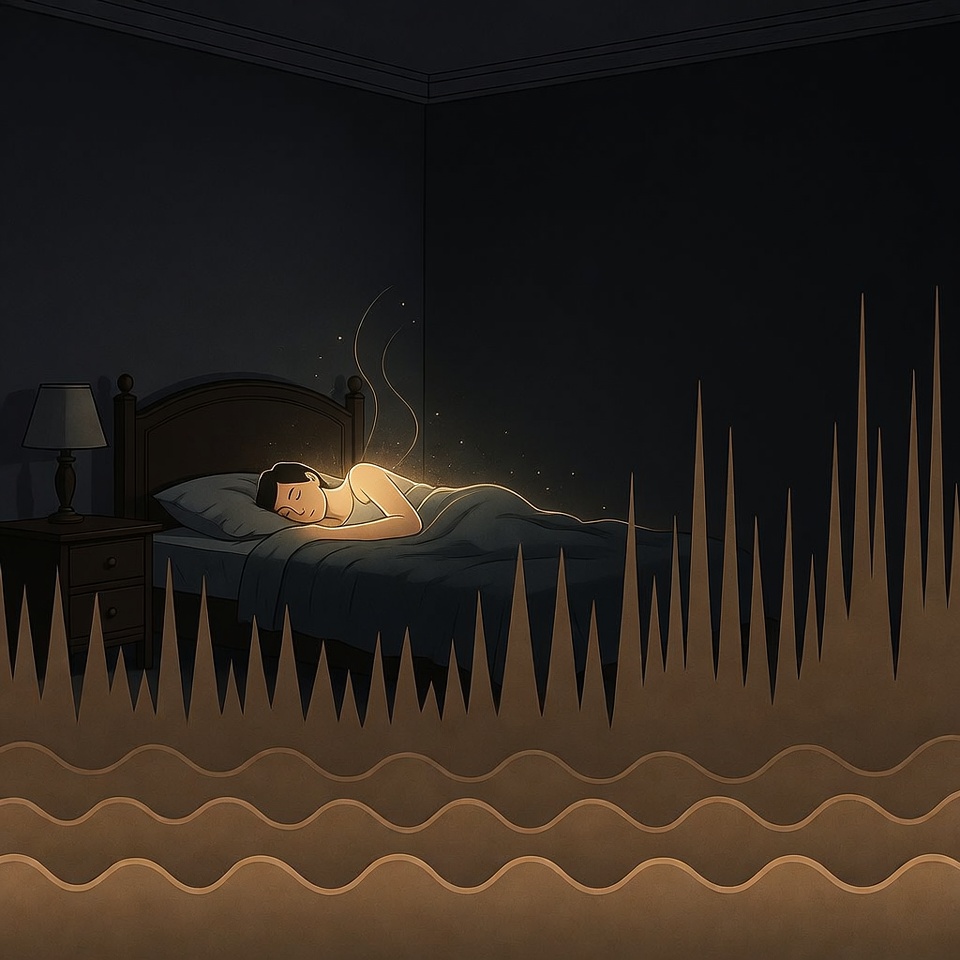
Sudden noise changes (a door slamming, a dog barking) trigger micro-arousals—brief awakenings you might not remember, but which fragment your sleep architecture. Continuous sound creates an auditory blanket, masking these disruptions. The color of noise matters:
- White Noise: Contains all audible frequencies equally. Best for masking high-pitched sounds.
- Pink Noise: Emphasizes lower frequencies. Some studies suggest it can enhance deep sleep and improve memory recall.
- Brown Noise: Even deeper, rumblier sound. Excellent for masking low-frequency urban noise.
How to Implement:
- A Dedicated Machine: Use a simple, non-looping white noise machine (like the LectroFan) placed between your bed and the noise source (e.g., a window).
- Smart Speaker Routine: Create a bedtime routine on Alexa or Google Home that plays brown noise on a loop for 8 hours.
- Earplugs: For total silence seekers, high-fidelity musician’s earplugs can be more comfortable than foam ones.
4. The Scent & Air Quality Reset 🌿
The Hack: Prioritize clean, cool, and subtly scented air.
The Science:
Poor air quality (high CO2, allergens, VOCs from paint or furniture) can cause inflammation and disrupt breathing during sleep. Conversely, certain scents like lavender have been shown in fMRI studies to calm the amygdala (the brain’s fear center) and increase slow-wave sleep. Fresh air lowers CO2 levels, which can otherwise cause morning grogginess.
How to Implement:
- Air Purifier: Run a HEPA air purifier, especially if you have allergies or live in an urban area.
- Lavender Protocol: Use a few drops of pure lavender essential oil in a diffuser 30 minutes before bed (not all night). Or, spray a linen mist on your pillow.
- Ventilation: Crack a window if safe and the outdoor temperature allows, or ensure good airflow.
5. The “Clockwork” Cue Consistency 🕐
The Hack: Make your pre-bed environment perfectly predictable.
The Science:
Humans are creatures of habit. Your brain loves predictive coding. When you perform the same series of sensory cues every night (dim lights, same scent, same sound), you create a powerful classical conditioning loop. This tells your parasympathetic nervous system to engage, lowering heart rate and preparing for sleep long before your head hits the pillow.
How to Implement:
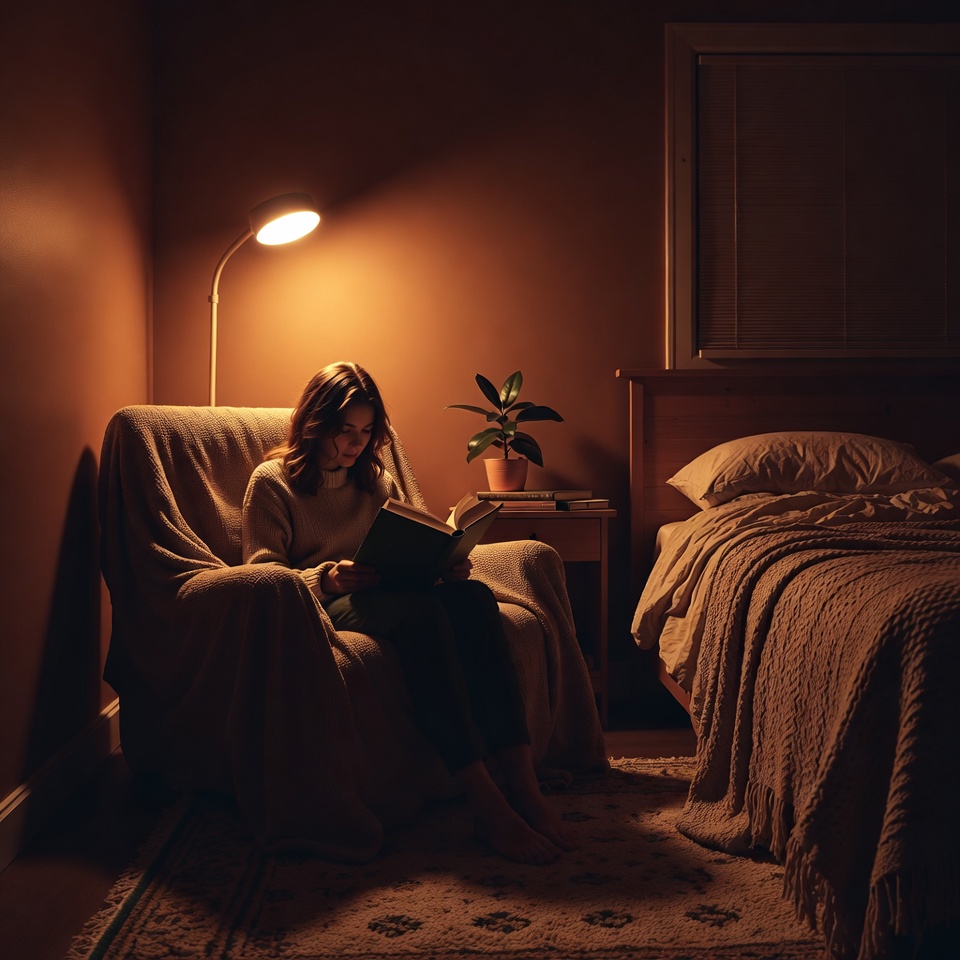
- The 45-Minute Ritual: Create a fixed sequence: e.g., Dim lights → Brush teeth → 10 pages of a (physical) book → 5 minutes of light stretching → Lights out.
- Smart Home Automation: Use smart bulbs (like Philips Hue) on a Sunset schedule that automatically dims to a warm, red-toned light over 30 minutes. Blue and green light are most disruptive to melatonin.
- Digital Sunset: Make this part of your ritual. A physical book is ideal, but if you use an e-reader, ensure it has a warm front light and no backlight.
Your Blueprint for a Sleep Sanctuary
You don’t need to overhaul your room tonight. Start with the highest-impact change based on your personal disruptor:
- Live in a bright or noisy city? Start with Absolute Darkness and Soundscape Engineering.
- Always feel too hot at night? Master the Thermal Drop Strategy.
- Feel anxious when trying to sleep? Implement the “Clockwork” Cue Consistency and Scent Reset.
The goal is to make your bedroom so effective at promoting sleep that feeling tired becomes an automatic, physiological response the moment you enter. This is about working with your biology, not against it. Invest in your sleep environment—it’s the one-third of your life where your body and mind do their most vital repair work. Tonight, begin by making it just a little bit darker, cooler, and more predictable. Your deeper sleep starts there.










 English
  Deutsch
  Français
  Italiano
  Español
  Čeština
  Polski
  Bahasa Indonesia
  Türkçe
  Svenska
  Українська
  Português do Brasil