




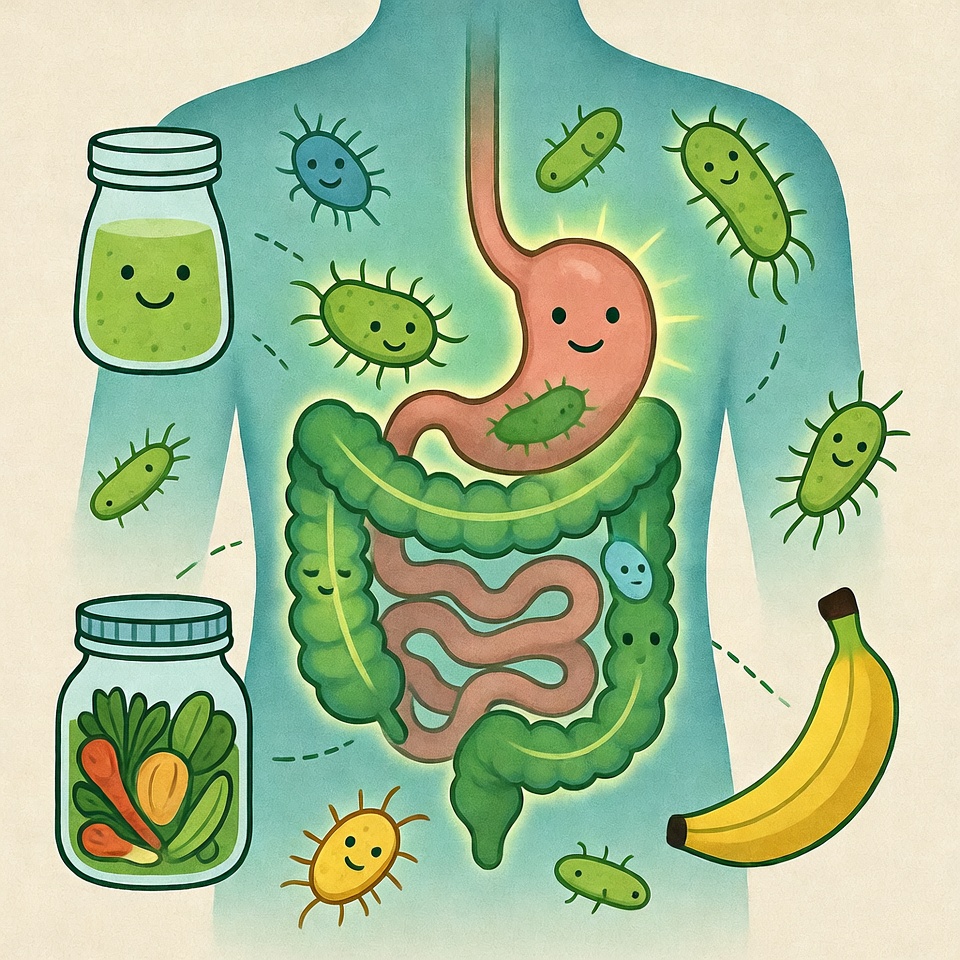
🦠✨. You’ve heard it before: Trust your gut. But what if your gut is sending SOS signals—bloating, irregularity, low energy? We often think of digestion as a simple bodily function, but your gut is a complex ecosystem, home to trillions of bacteria that influence everything from your immune system to your mood. The good news? You don’t need expensive supplements or drastic diets to become a better host to your microbial allies. The most powerful medicine is already in your kitchen.
The key is consistency. Think of these not as temporary fixes, but as daily allies. Here are three powerhouse foods to incorporate into your daily routine for a happier, healthier gut.
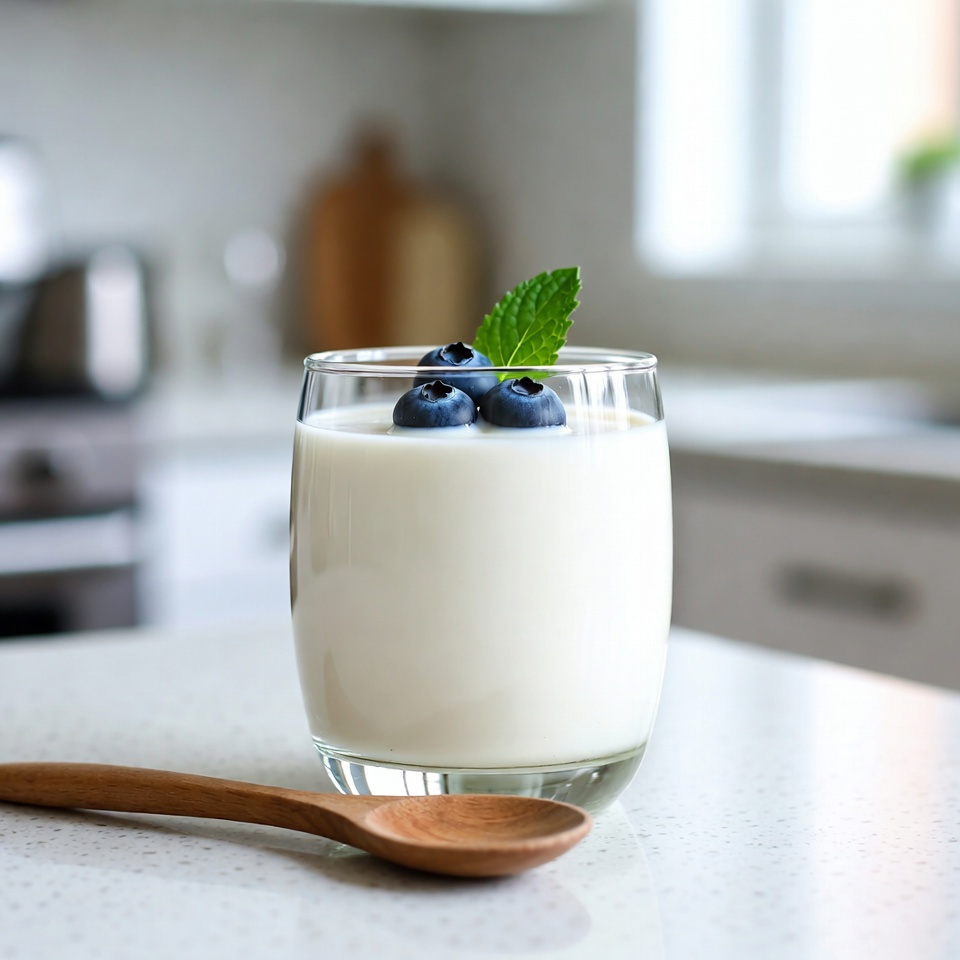
1. Kefir: The Probiotic Powerhouse 🥛
What it is: A fermented milk drink, similar to a drinkable yogurt, but with up to three times the number of probiotic strains.
Why it’s a Gut Hero:
Kefir is a fermented superstar. The grains used to make it are a symbiotic community of bacteria and yeast. This fermentation process creates a rich source of diverse probiotics (like Lactobacillus) that help populate your intestines with beneficial bacteria. These microbes aid in breaking down food, producing vitamins (like B12 and K2), and crowding out harmful pathogens. It’s also often well-tolerated by those with lactose intolerance, as the bacteria pre-digest most of the lactose.
Read also: The 5-Second Rule to Beat Morning Laziness and Boost Your Day
How to Make it a Daily Habit:
- The Morning Shot: Start your day with a small glass (about ½ cup) of plain, unsweetened kefir.
- Smoothie Base: Use it instead of milk or yogurt in your morning smoothie. Its tangy flavor pairs well with berries and banana.
- Savory Swap: Use plain kefir as a base for salad dressings or a refreshing cold soup like okroshka.
2. Fermented Vegetables: The Crisp, Tangy Reset 🥒
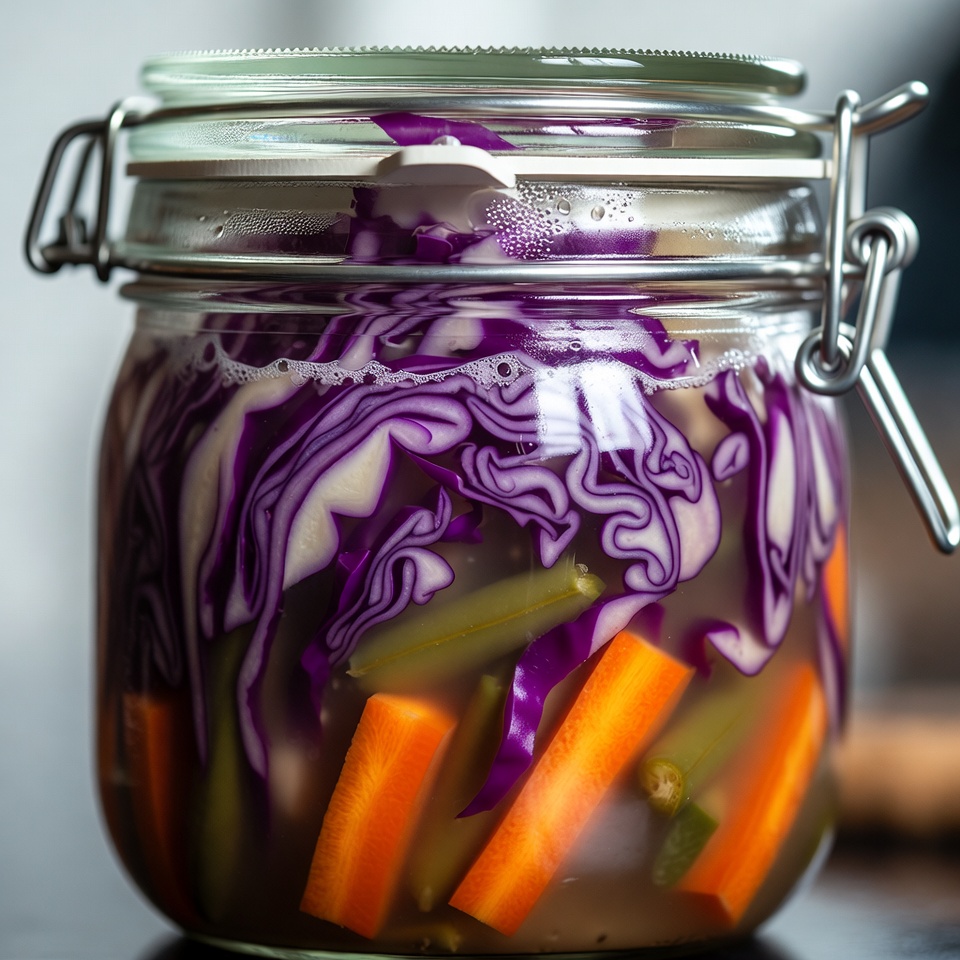
What they are: Vegetables transformed by lacto-fermentation, where natural bacteria feed on the vegetable’s sugars to produce lactic acid. Think sauerkraut, kimchi, or fermented carrots.
Why they’re a Gut Hero:
While kefir delivers probiotics, fermented vegetables provide both probiotics and prebiotics—the indigestible fiber that feeds your good bacteria. This one-two punch makes them incredibly effective. The fermentation also increases the bioavailability of the vegetables’ nutrients. The lactic acid produced creates an acidic environment in your gut that favors good bacteria and supports a healthy inflammatory response.
How to Make it a Daily Habit:
- The Condiment Rule: Don’t think of it as a side dish. Think of it as a vital condiment. Add a forkful to your plate every day.
- Top Your Meal: Add kimchi to rice bowls, eggs, or tacos. Put sauerkraut on avocado toast, salads, or alongside any protein.
- Important: To get the live probiotics, you must buy refrigerated, unpasteurized versions or make your own. Shelf-stable sauerkraut has been pasteurized, killing the beneficial bacteria.
3. The Humble Banana (Slightly Green): The Prebiotic Fuel 🍌
What it is: Specifically, a banana that is still slightly green at the tips.
Why it’s a Gut Hero:
This is your prebiotic champion. Slightly green bananas are rich in a type of fiber called resistant starch. As the name suggests, it resists digestion in your small intestine and travels to your large intestine, where it becomes the primary food source for your beneficial gut bacteria (like Bifidobacteria). Feeding these bacteria helps them thrive and produce beneficial short-chain fatty acids, which are crucial for colon health and reducing inflammation.
How to Make it a Daily Habit:
- The Perfect Snack: Keep slightly green bananas on your counter. Eat one as a mid-morning or afternoon snack.
- Blend it: Add half a green-tipped banana to your kefir smoothie for a probiotic-prebiotic power combo.
- Oatmeal Topper: Slice it over your morning oats. The heat from the oats is fine—it’s the fiber that matters.
The Supporting Habits: How You Eat Matters Too 🍽️
These foods work best when supported by mindful habits:
- Chew, Chew, Chew: Digestion starts in your mouth. Chewing thoroughly breaks down food and eases the workload on your gut.
- Sip, Don’t Guzzle: Avoid drinking large amounts of cold water during meals, as it can dilute stomach acid. Sip warm water or herbal tea instead.
- The 12-Hour Window: Try to finish your last meal of the day at least 12 hours before your first meal the next morning (e.g., dinner at 7 PM, breakfast at 7 AM). This gives your digestive system a crucial rest and repair period.
Your 3-Day Gut-Friendly Jumpstart
Day 1: Buy plain kefir and a jar of raw sauerkraut. Have kefir with breakfast and a spoonful of sauerkraut with lunch.
Day 2: Add a slightly green banana to your afternoon routine. Chew your dinner slowly, aiming for 20 chews per bite.
Day 3: Combine them all: Make a smoothie with kefir, half a green banana, and a handful of berries.
Building a resilient gut is a marathon, not a sprint. It’s about small, consistent choices that add up to a profound internal shift. By making these three foods your daily non-negotiables, you’re not just eating for taste—you’re cultivating an inner ecosystem that powers your entire well-being. Your gut will thank you with energy, clarity, and calm.









 English
  Deutsch
  Français
  Italiano
  Español
  Čeština
  Polski
  Bahasa Indonesia
  Türkçe
  Svenska
  Українська
  Português do Brasil