
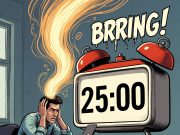


🪑💥. Feeling that familiar mid-afternoon crash? Your shoulders are up by your ears, your neck feels like concrete, and a low-grade tension headache is brewing behind your eyes. You know you should move, but the idea of changing into workout clothes or even taking a full lunch break feels impossible. The emails are piling up, and the clock is ticking.
What if you could short-circuit that stress response and reset your body and mind in less time than it takes to reply to a message? You can—right from your desk chair. These aren’t just stretches; they’re deliberate movements and breathing techniques designed to release the physical manifestations of mental stress. No equipment needed, no weird looks from coworkers. Just you, your chair, and five minutes to change your day.
The Science of Desk-Bound Stress 🧠
When we’re stressed or hyper-focused, our breath becomes shallow (chest breathing), our posture collapses, and we unconsciously clench our jaw, shoulders, and hips. This creates a vicious cycle: mental stress causes physical tension, which then signals back to the brain that we’re in fight or flight mode, amplifying the anxiety.
Read also: The 30-Day No-Spend Challenge
These exercises break the cycle by:
- Activating the Parasympathetic Nervous System (the rest and digest state) through deliberate breathing.
- Releasing Muscle Trigger Points where stress accumulates.
- Improving Circulation to the brain, combating foggy thinking.
Category 1: The Breathing Resets (The 60-Second Fix)
These are your secret weapons. They can be done with your eyes open, staring straight at your screen.
1. The Box Breath (For Instant Calm)
- How: Inhale deeply through your nose for a count of 4. Hold the breath for a count of 4. Exhale slowly through your mouth for a count of 4. Hold the emptiness for a count of 4. Repeat 4 times.
- Why It Works: The equal ratios and breath retention regulate your heart rate and oxygenate your blood, forcing your nervous system to calm down. It’s used by Navy SEALs for a reason.
- Visual Cue: Imagine tracing a square with your breath: up, across, down, across.
2. The Sighing Breath (For Releasing Frustration)
- How: Take a deep, two-part inhale through your nose (filling your belly, then your chest). Then, release one long, audible, sighing exhale through your mouth. Let your shoulders drop. Repeat 3 times.
- Why It Works: The prolonged exhale is a direct signal to your vagus nerve to initiate relaxation. The sound itself is cathartic.
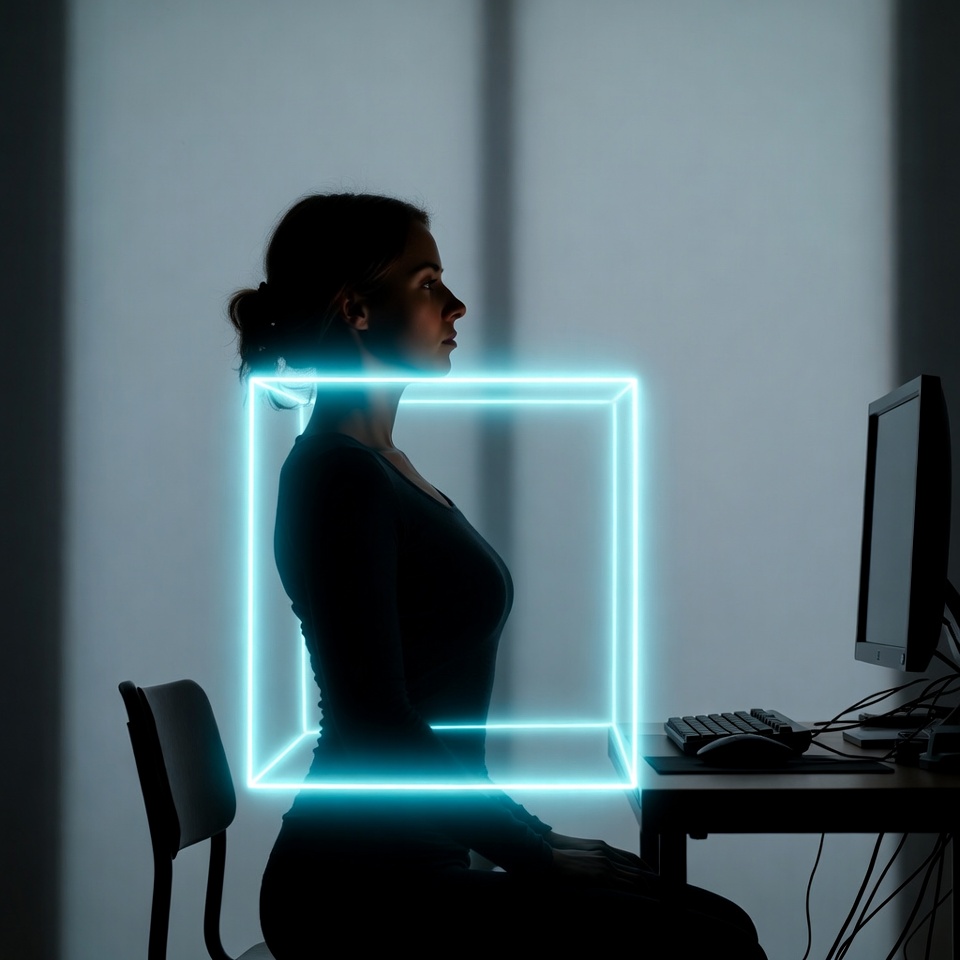
Category 2: The Micro-Stretches (For the Physical Knots)
Target the primary stress containers: neck, shoulders, and back.
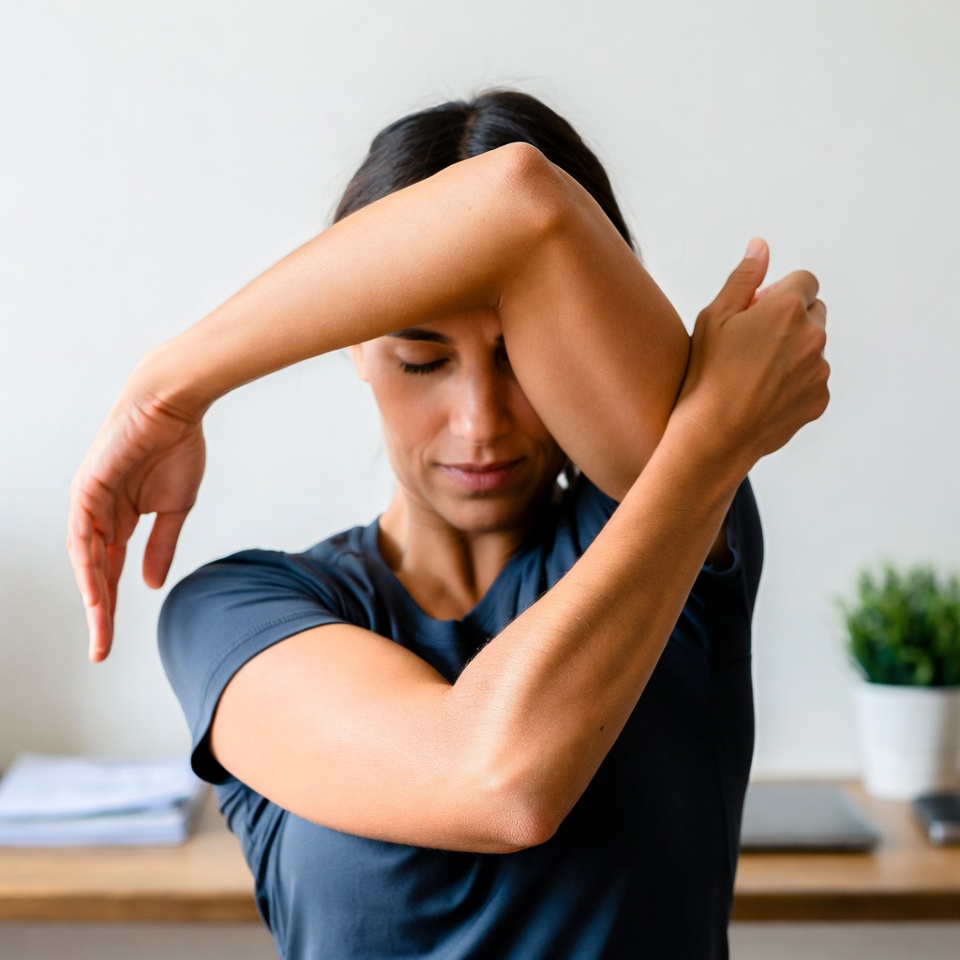
1. The Seated Eagle Arms (For Shoulders & Upper Back)
- How: Sitting tall, stretch your arms out in front of you. Cross your right arm over your left, then bend your elbows, bringing the backs of your hands or forearms to touch if possible. Lift your elbows slightly while dropping your shoulders. Take 3 deep breaths. Feel the intense stretch between your shoulder blades. Unwind and switch sides (left over right).
- Why It Works: This opens up the rotator cuff and scapular muscles, which get hunched and tight from typing and mousing.
2. The Seated Cat-Cow (For Your Spine)
- How: Place both feet flat on the floor. On an inhale, arch your back, roll your shoulders down and back, and look slightly up (Cow Pose). On an exhale, round your spine, tuck your chin, and let your head drop forward (Cat Pose). Flow smoothly between them for 5-10 breaths.
- Why It Works: It restores mobility to your entire spine, counteracting the static, C-shaped slump of sitting.
3. The Chin Tuck (For Tech Neck)
- How: Sit up straight. Gently draw your chin straight back, creating a double chin. Keep your eyes level—don’t look down. Hold for 3-5 seconds, feeling a stretch at the base of your skull. Release. Repeat 10 times.
- Why It Works: It strengthens the deep neck flexors and counteracts the forward head posture that causes neck pain and headaches.
Read also: The Two-Minute Rule That Will Stop Your Procrastination for Good
Category 3: The Isometric & Strength Moves (To Re-energize)
These engage muscles without movement, boosting circulation and alertness.
1. The Desk Push-Away (For Chest & Posture)
- How: Sit tall, grip the sides of your desk or armrests. Try to push yourself away from the desk, using your arms, while keeping your body seated. Engage for 10 seconds. Relax. Repeat 3 times.
- Why It Works: It engages your back and shoulder muscles, pulling you out of a hunched position and waking up your upper body.
2. The Seated Leg Extension (For Hips & Quads)
- How: Sit tall. Extend your right leg out straight in front of you, heel on the floor. Flex your foot and gently engage your thigh. Hold for 5 seconds. Release. Do 10 reps per leg.
- Why It Works: Sitting tightens the hip flexors. This movement lengthens them and gets blood flowing in the legs, reducing that heavy, sluggish feeling.
Your 5-Minute Desk Detox Routine ⏰
When stress hits, don’t just sit there. Run through this sequence:
- Minute 1-2: Box Breath (4 cycles).
- Minute 2-3: Seated Cat-Cow (8 slow flows).
- Minute 3-4: Seated Eagle Arms (3 breaths per side).
- Minute 4-5: Desk Push-Away (3 holds of 10 seconds) followed by a final Sighing Breath.

Make It a Habit: The Task-Trigger Method
Link these exercises to a daily task you already do. For example:
- After every email sent: Do 3 Chin Tucks.
- Before a meeting: Take 3 Sighing Breaths.
- On the hour, every hour: Perform the 60-second Seated Leg Extension sequence.
Your desk doesn’t have to be a prison for your posture and peace of mind. It can be your personal mini-gym for mental clarity and physical release. The most productive thing you can do next might not be to power through—it might be to pause, breathe, and move. Your brain—and your tense shoulders—will thank you.








 English
  Deutsch
  Français
  Italiano
  Español
  Čeština
  Polski
  Bahasa Indonesia
  Türkçe
  Svenska
  Українська
  Português do Brasil