





🌍💻. Did you know that if the internet were a country, it would be the 4th largest consumer of electricity in the world? Every email, every streamed video, every cloud-stored photo has a hidden environmental cost. But here’s the good news: with a few simple tweaks to your digital habits, you can significantly reduce your digital carbon footprint without sacrificing convenience.
The Invisible Pollution in Your Pocket 📱
We think of digital activities as clean, but they rely on massive data centers that consume enormous amounts of energy. A single Google search uses about 0.3 watt-hours of electricity – that doesn’t seem like much until you consider there are 8.5 billion searches daily.
The average person’s digital habits generate approximately 414kg of CO2 per year – equivalent to a flight from New York to London. But unlike air travel, we don’t see the environmental impact of our digital lives.

Habit 1: The Email Diet 📧
The Problem: Unnecessary emails clog servers and consume energy. The average office worker receives 121 emails daily, and storing these indefinitely has real environmental costs.
Read also: How to Clean Up Your Gmail Inbox
Action Steps:
- Unsubscribe from 5 newsletters you don’t read today
- Use “Cleanfox” or “Unroll.me” to mass unsubscribe
- Delete old emails regularly, especially those with large attachments
- Send fewer thank you emails (one less thanks saves 1g CO2)
- Compress attachments before sending
Habit 2: Smarter Streaming 🎬
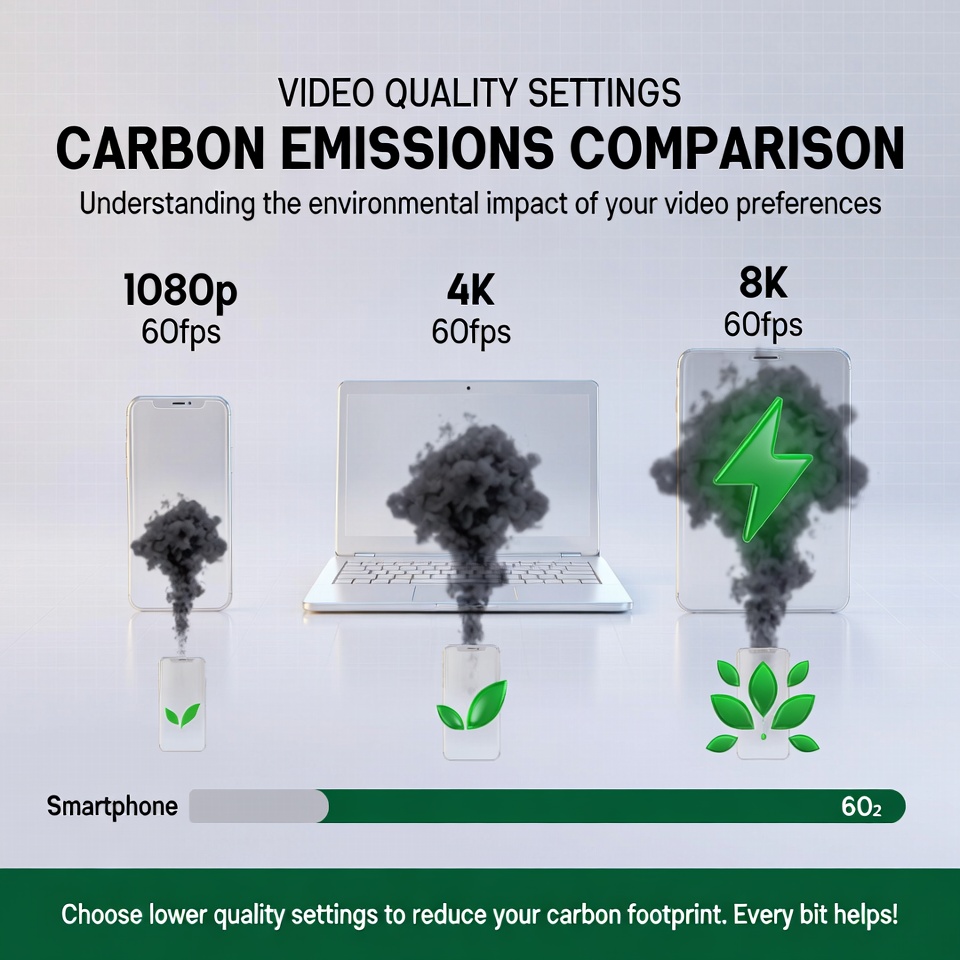
The Problem: Video streaming accounts for 60% of internet traffic. Watching in 4K instead of HD increases carbon emissions by 400%.
Action Steps:
- Default to 480p or 720p on mobile devices
- Download content when on WiFi instead of streaming repeatedly
- Turn off autoplay on YouTube and Netflix
- Listen to audio-only when possible (music streaming uses less energy than video)
- Share streaming accounts within households
Habit 3: Cloud Cleanup ☁️
The Problem: We store thousands of duplicate photos, old documents, and unused files in the cloud indefinitely. Each gigabyte stored produces about 3kg of CO2 annually.
Action Steps:
- Dedicate 10 minutes weekly to delete unnecessary files
- Remove duplicate photos using Google Photos’ duplicate finder
- Empty cloud trash folders (they still consume energy!)
- Use local storage for archives instead of cloud
- Compress files before uploading
Habit 4: Device Longevity ♻️
The Problem: Manufacturing a new smartphone generates 85% of its lifetime carbon emissions. Extending device life is the most effective tech sustainability strategy.
Action Steps:
- Use phones for 3+ years instead of upgrading annually
- Repair instead of replace (check ifixit.com for guides)
- Buy refurbished devices
- Use protective cases and screen protectors
- Resell or properly recycle old devices
Habit 5: Energy-Efficient Browsing 🌐
The Problem: Some websites are energy hogs, using poorly optimized code, auto-play videos, and heavy graphics.
Action Steps:
- Use browser extensions like “The Green Web Foundation”
- Block autoplay videos
- Use dark mode on OLED screens (saves up to 60% energy)
- Close unused tabs (each open tab consumes resources)
- Bookmark frequently visited sites instead of searching repeatedly
Habit 6: Smart Charging 🔋
The Problem: Overcharging and inefficient charging habits waste energy and degrade battery life.
Action Steps:
- Charge devices during daytime hours when renewable energy is more available
- Use smart plugs to prevent overnight overcharging
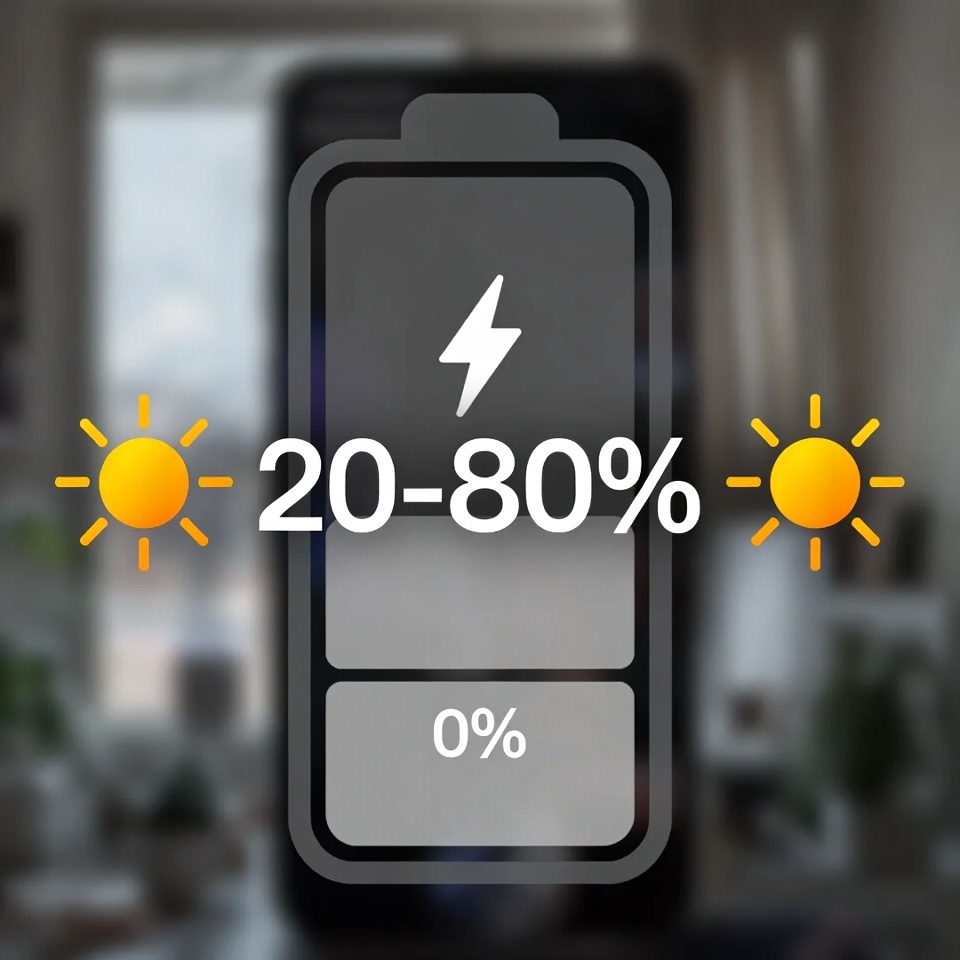
- Maintain batteries between 20-80% for optimal longevity
- Unplug chargers when not in use (they still draw power!)
- Consider solar-powered chargers for mobile devices
Habit 7: Conscious Conferencing 📹
The Problem: An hour of video conferencing emits 150-1000g of CO2, depending on streaming quality.
Action Steps:
- Turn off video when audio suffices
- Use phone audio instead of computer audio when possible
- Lower streaming quality in group settings
- Record only essential meetings
- Choose audio-only options for podcast interviews
Read also: Your To-Do List Is Broken. Here’s How to Fix It With the Eisenhower Matrix
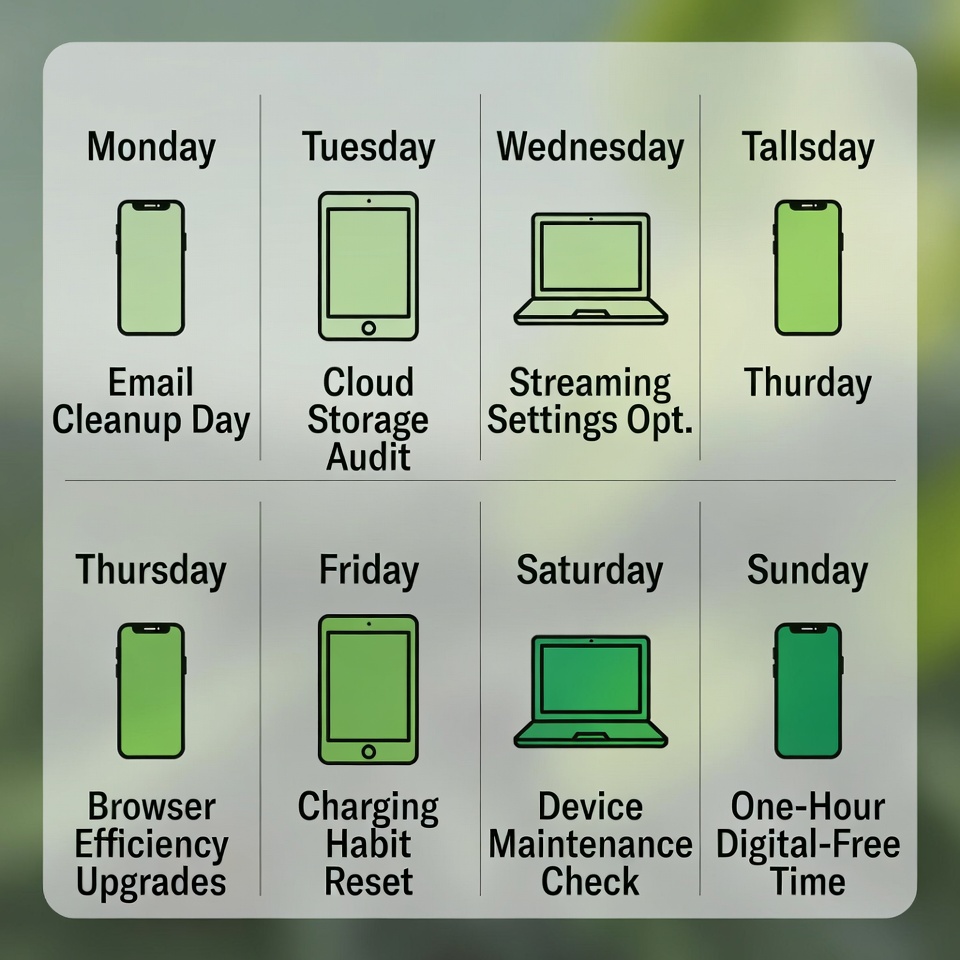
The 7-Day Digital Detox Challenge 📅
Monday: Email cleanup day
Tuesday: Cloud storage audit
Wednesday: Streaming settings optimization
Thursday: Browser efficiency upgrades
Friday: Charging habit reset
Saturday: Device maintenance check
Sunday: One-hour digital-free time
The Ripple Effect 🌊
What makes these habits powerful is their collective impact. If 1,000 people adopted just the email cleanup habit, we could save approximately 1.5 tons of CO2 annually. Scale that to millions, and we’re talking about real environmental change.
Plus, most of these habits have personal benefits too:
- Less digital clutter means less stress
- Longer device life saves money
- Efficient browsing speeds up your devices
- Conscious consumption creates mindfulness
Your Digital Legacy Starts Today 🌱
The beauty of digital sustainability is that it’s invisible to everyone except the planet. You won’t see the energy saved or emissions reduced, but you’ll know you’re part of a growing movement toward responsible tech use.
Start with one habit this week. Maybe clean up 50 old emails tonight. Or change your default streaming quality. Small steps create momentum. Your digital carbon footprint is one area where being lazy (using devices longer, streaming less) actually benefits the environment.
Remember: The most sustainable device is the one you already own. The cleanest email is the one never sent. The greenest stream is the one enjoyed consciously. Your tech habits matter more than you think.












 English
  Deutsch
  Français
  Italiano
  Español
  Čeština
  Polski
  Bahasa Indonesia
  Türkçe
  Svenska
  Українська
  Português do Brasil