





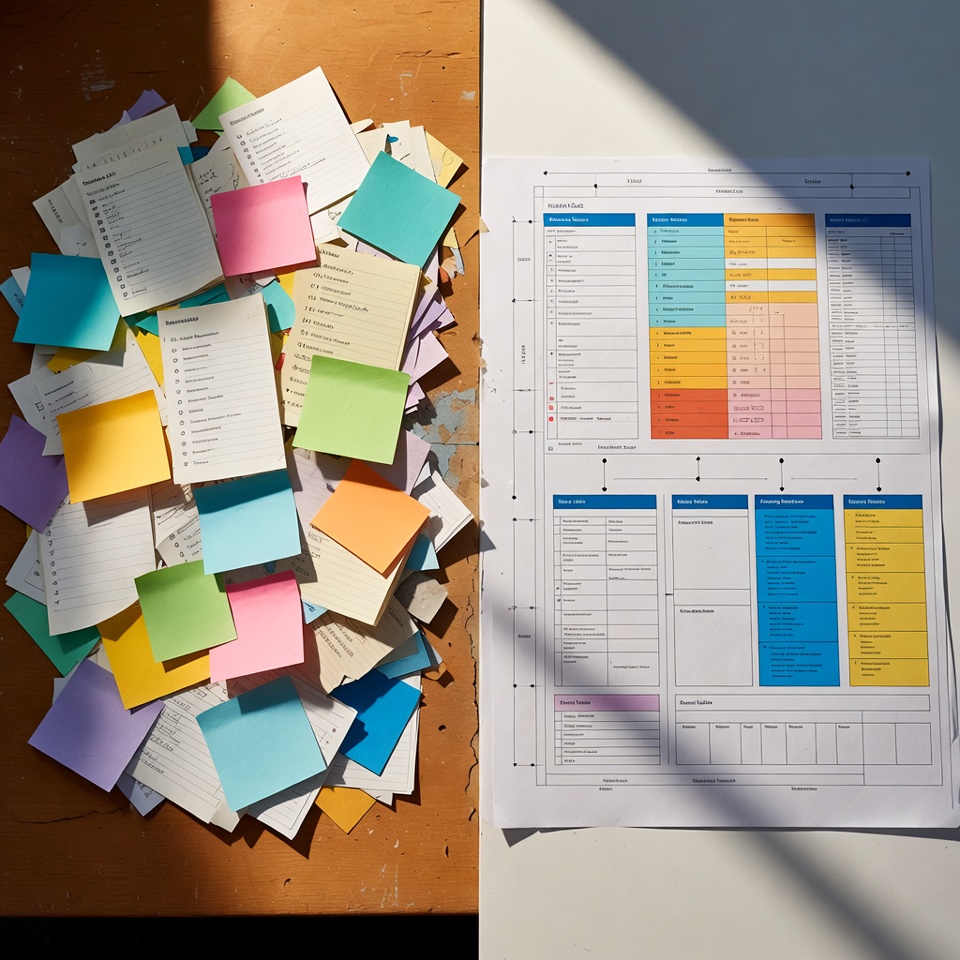
Feel like your days are a frantic blur of reactions? You start with a plan, but by 10 AM, you’re drowning in emails, “quick questions,” and notifications, leaving your important work for “when you have time.” That time never comes.
What if you could transform your chaotic schedule into a blueprint for success? The most productive people in the world—from Elon Musk to Bill Gates—use a powerful method to do exactly that. It’s called Time-Blocking, and it’s not just a calendar trick; it’s a fundamental shift in how you command your time.
What is Time-Blocking? (It’s More Than a To-Do List)
Time-blocking is a time management method where you plan your day into discrete blocks of time. Each block is dedicated to accomplishing a specific task or group of tasks. Instead of working from a reactive to-do list, you work from a proactive schedule that you designed.
Think of it this way:
- A To-Do List tells you what to do.
- A Time-Blocked Schedule tells you what to do and when you’re going to do it.
It’s the difference between having a pile of lumber and having an architectural blueprint. One is a collection of tasks; the other is a plan for building your day.
The Psychology Behind the Power: Why Your Brain Loves It
Why is this method so effective? It works with your brain’s natural wiring, not against it.
- It Fights Decision Fatigue: Every time you have to decide “what to work on next,” you use up mental energy. By scheduling your day in advance, you make one big decision in the morning instead of hundreds of small ones all day. This conserves willpower for the work that actually matters.
- It Creates a “Flow State” Container: Deep, meaningful work requires uninterrupted focus. By blocking off a 90-minute chunk for a project, you are giving yourself permission to dive deep, minimizing the temptation to multitask or check emails.
- It Sets Realistic Expectations: A to-do list with 20 items is a fantasy. A time-blocked schedule forces you to confront the reality of how much time you actually have, leading to better planning and less frustration.
- It Makes You the Boss of Your Time: When a colleague asks, “Do you have a minute?”, you can look at your calendar and honestly say, “I’m booked on a project until 11, but I have a free block at 2 PM.” You stop being a victim of other people’s priorities.
Read also: 7 Rules to Reclaim Your Focus

How to Start Time-Blocking: Your 5-Step Guide
Ready to build your first time-blocked day? It’s simple.
Step 1: Choose Your Tool.
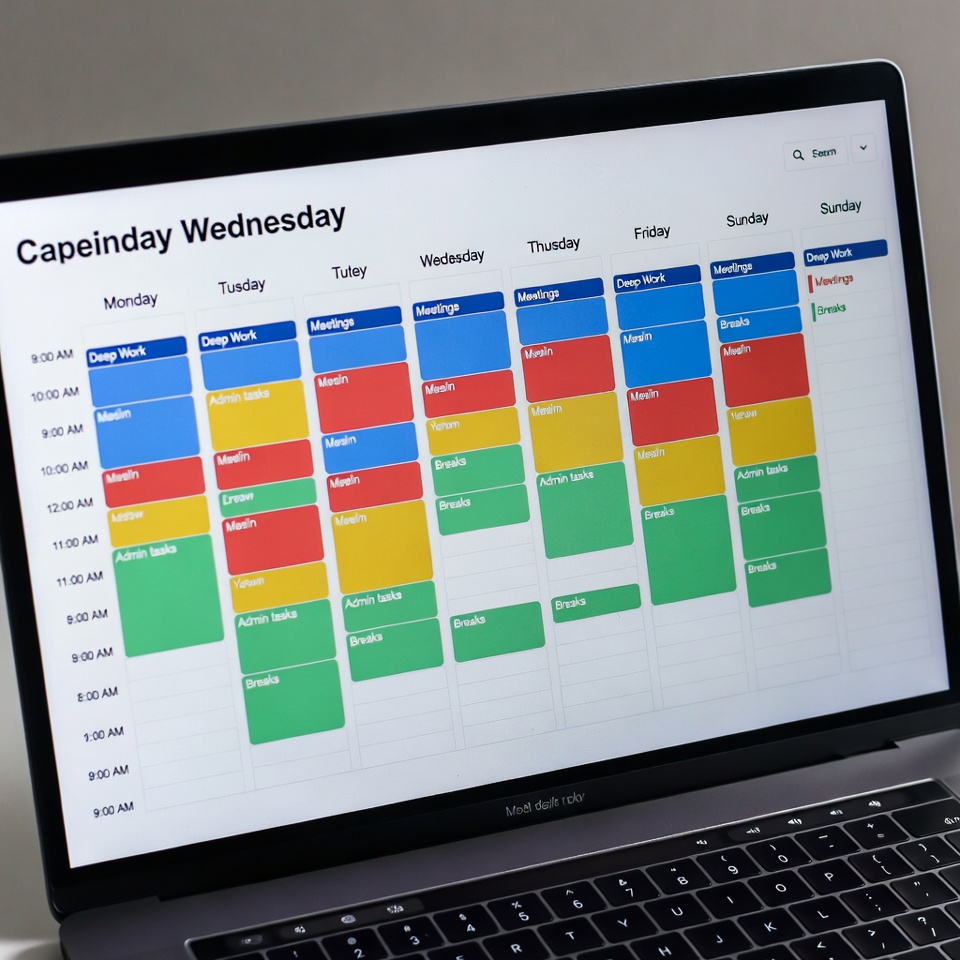
You can use a digital calendar (like Google or Outlook Calendar) for easy adjustments and reminders, or a physical notebook if you prefer the tactile experience. Color-coding is highly recommended!
Step 2: Identify Your “Big Rocks” First.
Based on the famous analogy, if you fill a jar with sand (small tasks) first, you can’t fit the big rocks (important projects). Schedule your most important, high-impact tasks first. These are your “Big Rocks.” What is the one thing that, if completed, would make today a success?
Step 3: Block Your Time.
Start filling in your calendar:
- Deep Work Blocks (90-120 min): For focused, strategic work.
- Administrative Blocks (30-60 min): For emails, messages, and minor tasks.
- Meeting Blocks: Cluster meetings together to protect your focus time.
- Buffer Blocks (15-30 min): Crucial! These blocks catch the overflow, handle surprises, and provide breaks.
- Break Blocks: Schedule lunch, coffee breaks, and short walks. Your brain needs fuel and rest.
Step 4: Defend Your Blocks Relentlessly.
This is the most critical step. Treat a time block with the same respect as a meeting with your CEO. If it’s in the calendar, it’s non-negotiable. Close your tabs, silence your notifications, and focus.
Step 5: Review and Adapt.
At the end of the week, review your schedule. What worked? What didn’t? Did you consistently underestimate how long tasks took? Use this insight to create a more realistic schedule for next week.
Pro-Tips for Time-Blocking Mastery
- Theme Your Days: To simplify decision-making further, assign a broad theme to each day (e.g., “Monday: Marketing,” “Tuesday: Deep Projects,” “Wednesday: Meetings”).
- The “Two-Pizza” Rule for Meetings: If a meeting can’t be fed with two pizzas, it’s too big. Keep meetings small and agenda-driven, and always schedule them with a clear end time.
- Plan Your Week on a Friday: Spend 15 minutes on Friday afternoon to time-block the following week. This allows you to truly disconnect for the weekend and hit the ground running on Monday.

Your Time is Your Most Precious Asset. Guard It.
Time-blocking is more than a productivity hack; it’s a philosophy of intentional living. It’s a commitment to doing what you said you would do, when you said you would do it. It’s the secret weapon that moves you from being reactive to being proactive, from being busy to being genuinely productive.
Stop letting your days control you. Take out your calendar, and start building your first time-blocked schedule. Your future, more successful self will thank you for it. 🚀












 English
  Deutsch
  Français
  Italiano
  Español
  Čeština
  Polski
  Bahasa Indonesia
  Türkçe
  Svenska
  Українська
  Português do Brasil