





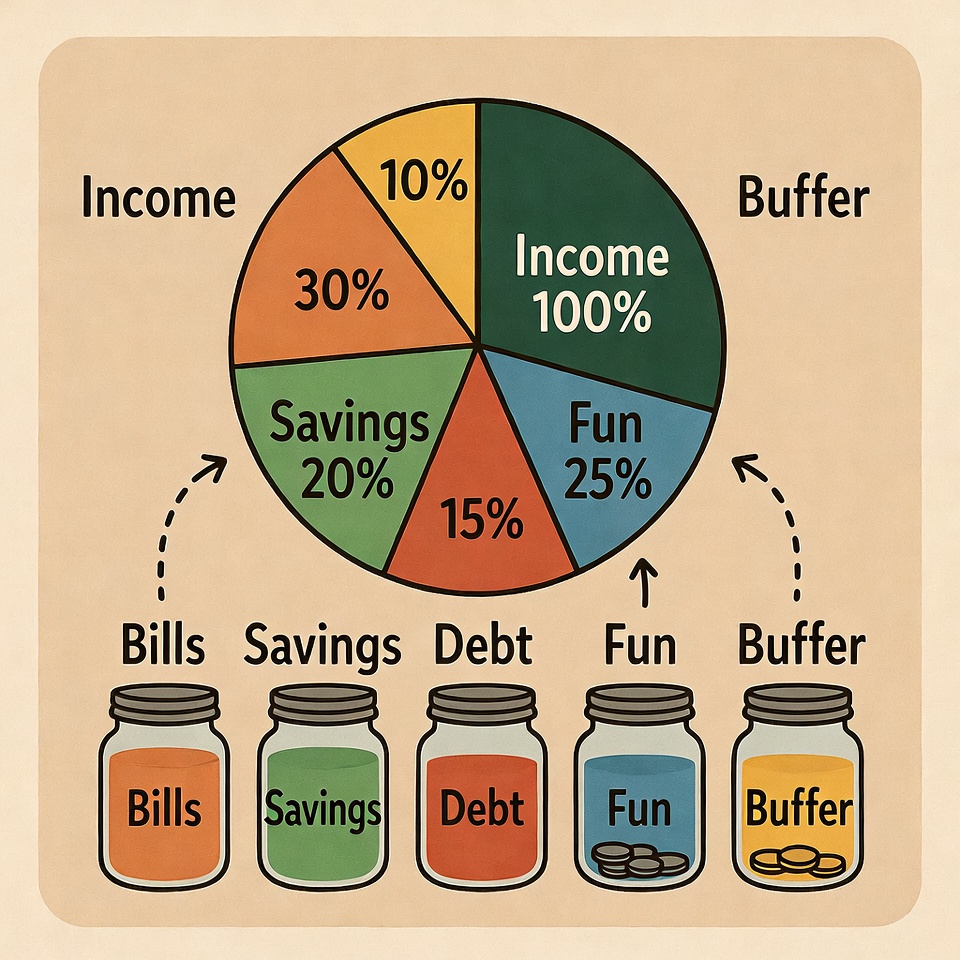
💸➡️🎯. Does your money seem to disappear each month, leaving you wondering where it all went? You might have a vague budget, but there’s always a gap between your plan and reality. Enter Zero-Based Budgeting (ZBB)—a simple, powerful method that doesn’t just track your spending, but gives every single dollar a purpose before the month even begins.
Think of it as a financial blueprint. Instead of starting with last month’s habits, you start from zero and build a plan that aligns your spending with your actual priorities. No dollar gets to hide. It’s the ultimate tool for financial awareness and control. If you’re ready to stop guessing and start directing your money, here’s your stress-free beginner’s guide.
What is Zero-Based Budgeting? (It’s Simpler Than It Sounds)
The core principle is in the name: Your Income minus Your Expenses = Zero.
This doesn’t mean you spend everything to $0. It means you assign every dollar of your income to a specific job until nothing is left unaccounted for. Those jobs include:
- Bills & Essentials (Rent, groceries, utilities)
- Financial Goals (Savings, debt payments, investments)
- Fun & Lifestyle (Dining out, hobbies, subscriptions)
- A Buffer (For the unexpected)
If you have $500 left after bills and savings, you deliberately decide if it goes to extra debt payments, a weekend trip, or next month’s emergency fund. You are the boss of your money.
Read also: A Simple Spending Plan for People Who Hate Math
Your 4-Step Blueprint to Your First Zero-Based Budget
Step 1: Find Your Zero – Calculate Your Monthly Income.
Add up all your take-home pay (after taxes) for the month. If your income is irregular, use an average of the last 3 months or estimate conservatively. This is your total resource pool. Example: $3,500.
Step 2: List Every Possible Expense – The “EveryDollar” Method
This is the most crucial step. Grab a notebook, spreadsheet, or app and list every single expense category. Start with:
- Fixed Costs: Rent/Mortgage, Car Payment, Insurance, Subscriptions.
- Variable Essentials: Groceries, Gas, Utilities (average them).
- Financial Goals: Savings ($200), Debt Extra Payments ($100), Retirement.
- Lifestyle: Dining Out ($150), Entertainment ($50), Personal Care.
- The Buffer/Oops Fund: A small category for surprises ($100).
Step 3: Assign Every Dollar a Job – The Zero Out Moment.
Subtract each category from your income until you hit zero. If you have money left over, assign it a job—boost your savings or debt payment. If you’re over budget, you must cut back on variable categories (like dining out) until income minus expenses equals exactly zero.
Step 4: Track & Tweak – The Daily 2-Minute Check.
A budget isn’t a “set and forget” plan. Track every transaction daily. This takes 2 minutes with an app. Did you spend $10 less on gas? Move that $10 to another category immediately. This keeps you in active control.
The Tools That Make It Effortless 📱
1. Dedicated Budgeting Apps:
- YNAB (You Need A Budget): The gold standard for ZBB. It enforces the methodology, syncs with your bank, and makes tracking seamless. (Paid, but worth it).
- EveryDollar: Dave Ramsey’s app. The free version lets you build a zero-based budget manually; the paid version links to your accounts.
- Goodbudget: Uses the digital envelope system, perfect for the ZBB mindset.
2. Simple Spreadsheet Template:
For those who want total control and simplicity. Create a table with these columns:
| Category | Planned | Spent | Difference |
|---|---|---|---|
| Income | $3,500 | ||
| Rent | $1,200 | $1,200 | $0 |
| Groceries | $400 | $385 | +$15 |
| Dining Out | $150 | $175 | -$25 |
| Total Remaining | $0 | $0 |
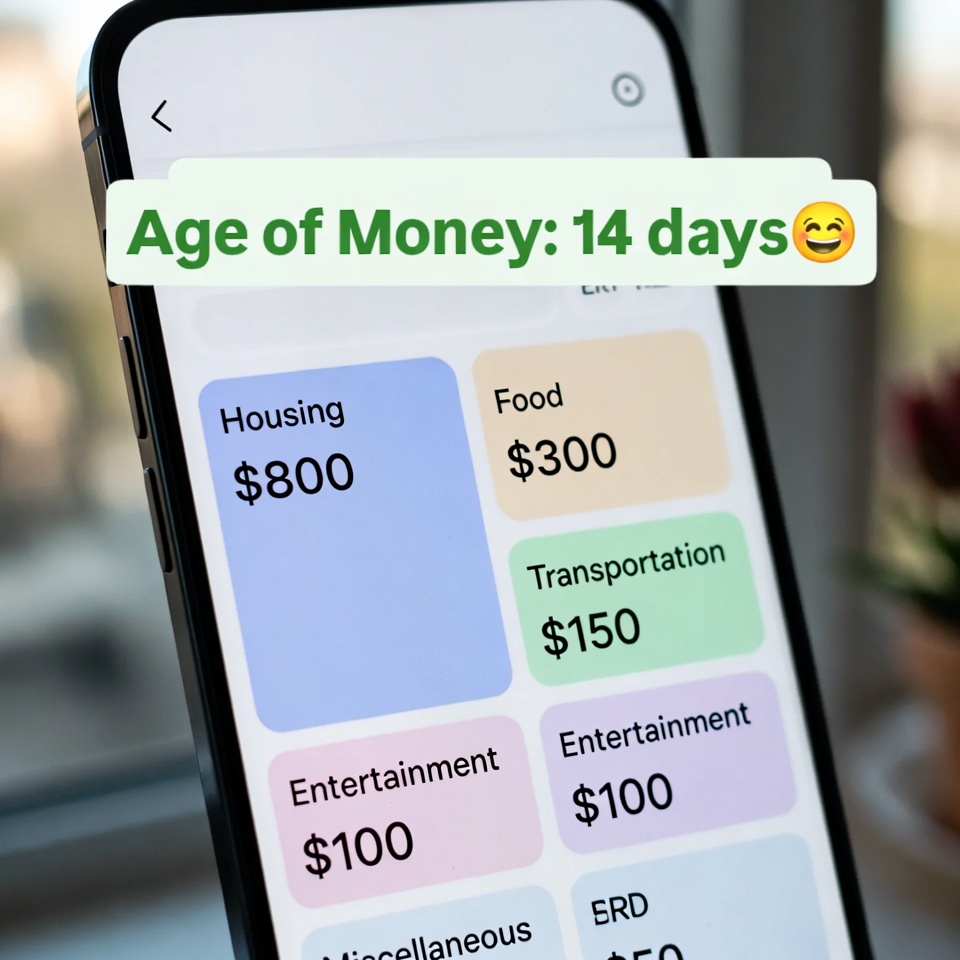
Your First Week Sample Plan (The Soft Launch)
Don’t try to perfect a full month on day one. Start with a weekly soft launch:
Days 1-2: Gather your last 60 days of bank/credit card statements.
Day 3: Calculate your average monthly take-home pay.
Day 4: List your fixed expenses and financial goals.
Day 5: Fill in variable categories based on past spending.
Day 6: Zero out your budget using the template or app.
Day 7: Track just one category diligently (like Dining Out).
Conquering the #1 Beginner Challenge: Unexpected Expenses
The buffer category is your best friend. Start with a small “Oops Fund” ($50-100). When a surprise $40 pharmacy bill hits, it comes from there—not your grocery money. At month’s end, any leftover buffer gets rolled into savings, giving you a win.
Read also: How to Save $500 This Month Without Even Trying
The Mindset Shift: From Restriction to Empowerment
Zero-based budgeting feels restrictive at first. But the magic happens when you realize it’s not about what you can’t spend—it’s about consciously choosing what you want to spend on. That $100 for concerts is in the budget because you prioritized it over random Amazon purchases. That’s freedom.

Your First Month Milestone
Your goal for month one isn’t perfection—it’s awareness. You’ll likely overspend in one category and underspend in another. That’s fine. The victory is that you saw it happen and can adjust for next month. You’ve broken the cycle of guessing.
Start tonight. Open a notes app or grab a sheet of paper. Write down your income. Write down one financial goal. You’ve just begun building your blueprint. One dollar, one category, one conscious choice at a time.












 English
  Deutsch
  Français
  Italiano
  Español
  Čeština
  Polski
  Bahasa Indonesia
  Türkçe
  Svenska
  Українська
  Português do Brasil